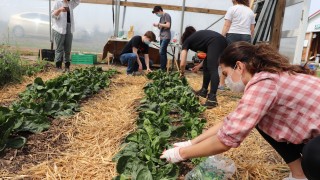
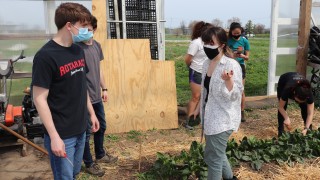
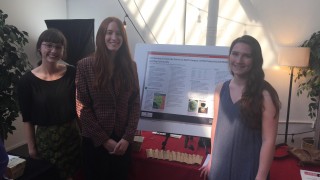
Ohio State fosters project-based learning opportunities and applied research to advance sustainability knowledge in practice, including on and around its diverse properties, with its external partners, or anywhere you can find a Buckeye.
To help coordinate, promote and empower these efforts, the Sustainability Institute facilitates collaboration with academic units and university partners to track and increase the wide range of project-based sustainability learning and applied research activities that occur inside and outside of the classroom environment, including those that use our campus facilities as a living lab.
Campus as a Living Lab: Ohio State leverages our properties and buildings to serve as a learning lab for sustainability research, innovation and learning and to shape new solutions by providing a test bed for applying and scaling research.
Partnering for Learning: In collaboration with local municipalities to global industry leaders, Ohio State's students, faculty, and staff address sustainability challenges at a variety of scales through project-based learning.
Search to see how Ohio State is advancing sustainability: use the filters below to search our database to see the innovative projects, research, and more that is occurring on our campuses and beyond.
Sustainability In Action Database
Relevant Projects Listed Chronologically
Assessing Sustainable School Transportation at Stevenson Elementary in Grandview HeightsAustin BrysonAssessing Sustainable School Transportation at Stevenson Elementary in Grandview Heights
Close dialog
Project Lead:Austin BrysonCompletion Date:Class Association:AEDECON 4567Collaborators:Gifford, Emerson
Ruth, Natalie
Hitzhusen, Gregory
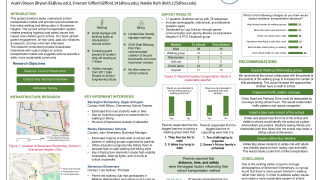
Jaquet, TimEmail:bryson.82@osu.eduPrimary Department/Unit:School of Environment and Natural ResourcesProducts:ENRAEDE4567_SustainableGrandview_au2022.pdf , ENRAEDE4567_SustainableGrandview_au2022_poster.pdfProject Description:This project assesses school transportation at Stevenson Elementary. Traffic flow and heavy congestion were identified as problems that contribute to unsafe conditions for school drop-off and pick-up. Working with Sustainable Grandview, our group evaluated current transportation habits and identified areas that could be improved to increase walking and biking to school. We researched current infrastructure that supports walking and biking by reviewing past transportation plans and on-site visits. Our group conducted key informant interviews for a baseline comparison of Stevenson Elementary with similar Central Ohio communities. Lastly, we administered a survey to Stevenson Elementary parents. From our research, our group recommended a variety of actions that could be taken to address safety concerns for walking and biking to school. Increasing the number of students walking and biking to school increases safety for everyone and promotes a healthier, more sustainable community.Project Type:Project with Partner OrganizationSustainability Topic Area:Built Environment, Natural EnvironmentProject Location:39.98050605083, -83.03544705
Introducing Products to Reduce Waste at the Commissary in the Ohio Reformatory for WomenLily BucciarelliIntroducing Products to Reduce Waste at the Commissary in the Ohio Reformatory for Women
Close dialog
Project Lead:Lily BucciarelliCompletion Date:Class Association:AEDECON 4567Collaborators:Clinchot-Diaz, Arabel
Severyn, Olivia
Witherow, Kenedy
Jaquet, Tim
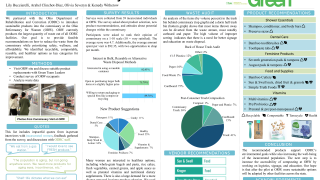
Hitzhusen, GregoryEmail:bucciarelli.4@osu.eduPrimary Department/Unit:School of Environment and Natural ResourcesProducts:ENRAEDE4567_ODRCWasteReductionInCommissaryPoster_au2022.pdf , ENRAEDE4567_ODRCWasteReductionInCommissary_au2022.pdfProject Description:The Ohio Department of Rehabilitation and Correction sought to reduce waste generated from the commissary at the Ohio Reformatory for Women (ORW) in Marysville, OH. Our capstone team was tasked with finding suitable products with recyclable or compostable packaging to be introduced into the commissary as sustainable alternatives. To understand the commissary and the preferences of the incarcerated population at ORW, we toured the facility, conducted an interview with two individuals from ORW's Green Team, and released a survey to a general population dormitory. Data gathered from the interviews and survey revealed that health is a top concern for incarcerated women, so we expanded our product scope to include vitamins, nutritional foods, and organic products. Additionally, we conducted a waste audit at the back of house commissary bins and the post-consumer bins placed in the dormitories. The final product recommendations include shower essentials, dental care, feminine products, food supplies, and vitamins. We recommend that ORW work with Kroger, Sun & Swell, Preserve, and the Zero Waste Store as vendors and introduce an alternative recycling program through Terracycle.Project Type:Project with Partner OrganizationSustainability Topic Area:Built EnvironmentProject Location:40.229971253636, -83.3799539
Reducing Victoria's Secret & Co. Scope 1 and 2 Emissions: A Peer Case StudyValerie BakerReducing Victoria's Secret & Co. Scope 1 and 2 Emissions: A Peer Case Study
Close dialog
Project Lead:Valerie BakerCompletion Date:Class Association:AEDECON 4567Collaborators:Hopkins, Elizabeth
Rosenberg, Isabelle
Ruscin, Hannah
Schorr, Jason
Jaquet, Tim
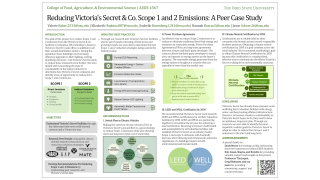
Hitzhusen, GregoryEmail:baker.2533@osu.eduPrimary Department/Unit:School of Environment and Natural ResourcesProducts:ENRAEDE4567_VictoriasSecretEmissions_au2022.pdf , ENRAEDE4567_VictoriasSecretEmissions_Poster_au2022.pdfProject Description:This paper discusses the capstone project our team completed. The team of 5 Environment, Economy, Development, & Sustainability students collaborated with Sarah Moore, ESG Manager at Victoria's Secret. Moore presented a project focusing on how to reduce Victoria's Secret scope 1 and scope 2 emissions of their Columbus facilities. The team analyzed public information from peer brands to learn what steps they are taking to become more sustainable, toured one of Victoria's Secret distribution centers, and conducted key informant interviews with two employees at Victoria's Secret. Utilizing this information, the team produced four high-level recommendations for Victoria's Secret to begin their efforts in becoming more sustainable.Project Type:Project with Partner OrganizationSustainability Topic Area:Built Environment, Sustainable Resources, Circular EconomyProject Location:39.959674323717, -82.78843755
City of Bexley – Assessing Community Sustainability Objectives via Community EngagementBraeden WhaleyCity of Bexley – Assessing Community Sustainability Objectives via Community Engagement
Close dialog
Project Lead:Braeden WhaleyCompletion Date:Class Association:AEDECON 4567Collaborators:Bergman, Rhianna
Damon, Stevie
Sullivan, Will
Jaquet, Tim
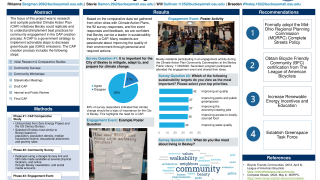
Hitzhusen, GregoryEmail:whaley.162@osu.eduPrimary Department/Unit:School of Environment and Natural ResourcesProject Description:This capstone project aims to assist the City of Bexley by beginning the process of creating a comprehensive Climate Action Plan (CAP). This CAP will serve as a framework that details how the City of Bexley will reach the Cities Race to Zero Program goal of net zero and long-term net negative greenhouse gas emissions in the 2040s. The project team completed a CAP comparative study, resident survey, and community engagement event to identify sustainability priorities. Based on the community input and feedback received through community outreach, the project team recommends that the final CAP does the following: adopt Mid-Ohio Regional Planning Commission Complete Street Policy, obtain the Bicycle Friendly Community (BFC) certification from The League of American Bicyclists, enhance renewable energy incentives and education, and establish a greenspace task force. Additionally, this report recommends that the City of Bexley continues to partner with capstone students from The Ohio State University to advance the CAP creation, adoption, and implementation processes.Project Type:Project with Partner OrganizationSustainability Topic Area:Built EnvironmentProject Location:39.964879861678, -82.9363578
- Compost for Columbus: A Policy Benchmarking ProjectNikki Dzurko
Compost for Columbus: A Policy Benchmarking Project
Close dialogProject Lead:Nikki DzurkoCompletion Date:Class Association:ENR/AEDE 4567Collaborators:Herman, Madeline
Kleinhenz, Grace
Price, Michael
Hitzhusen, GregoryEmail:dzurko.6@osu.eduPrimary Department/Unit:School of Environment and Natural ResourcesProject Description:The purpose of this report is to help the Compost Exchange and other composting stakeholders better understand how composting services can be increased in Central Ohio amid the landscape of policy and infrastructure dynamics that influence the economics and logistics of composting services. In order to do so, our team benchmarked other cities that have implemented waste bans, researched current compost policies and regulations statewide and in Central Ohio, examined the demographics of Ohio suburbs to identify likely communities where composting can be enhanced, considered political barriers to composting policy, and examined infrastructure dynamics, particularly in relation to the Solid Waste Authority of Central Ohio (SWACO). We conducted key informant interviews with staff at SWACO, Ohio Environmental Protection Agency (EPA), Ohio State University, and other municipalities to complement information we obtained through literature and online research, and we combined the results from all of these methods to produce a list of recommendations for how to improve composting in Central Ohio. Seven cities in the United States currently have food waste bans that serve as a benchmark to compare to a Central Ohio baseline. Austin, TX proved to be the most similar city to Columbus that currently has a food waste ban. Analysis of local demographics provided perspective on which composting policies might be most likely to be developed around Central Ohio. Key informant interviews added detail to our understanding and also provided a number of specific recommendations. Key barriers to food waste policies being passed in Central Ohio are political considerations, infrastructure, contamination, funding, and enforcement. As Central Ohio does not have any current food waste policies, this project focused on the steps necessary to prepare for one but also considered future barriers. This report highlighted recommendations to overcome these barriers, with a focus on collaboration between government agencies, the private sector, and stakeholders to efficiently use resources and support available.Project Type:Project with Partner OrganizationSustainability Topic Area:Natural Environment, Circular Economy, CompostingProject Location:39.983223247753, -82.9907458
Developing a Foundation for Sole Classics' Sustainability StrategyAudrey DavisDeveloping a Foundation for Sole Classics' Sustainability Strategy
Close dialog
Project Lead:Audrey DavisCompletion Date:Class Association:AEDECON 4567Collaborators:Gaglione, Isabelle
Harrison, Camden
Mason, Michaela
Petitpas, Cheyenne
Rapposelli, Michael
Rosenberg, Alexandria
Hitzhusen, Gregory
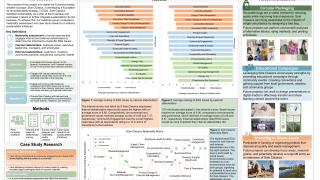
Braine, BruceEmail:davis.6409@osu.eduProject Description:Our team collaborated with the Columbus-based boutique, Sole Classics, to support the integration of sustainability into their business plan. We selected various Environmental, Social, and Governance (ESG) topics and collected primary data from both internal and external stakeholders through a survey. We received a total of 9 internal and 137 external responses providing an assessment of stakeholder views on the importance of each ESG topic and suggestions for sustainability initiatives for Sole Classics. We leveraged this data, along with case studies of existing sustainability initiatives, to gain a deeper understanding of the issues that impact SC and should be prioritized for future sustainability efforts. Our findings suggest that Sole Classics should prioritize community engagement through education, environmental justice, and local-level sustainability initiatives to build a meaningful sustainability story for the brand and align with stakeholder expectations.Project Type:Project with Partner OrganizationSustainability Topic Area:Built Environment, Community EngagementProject Location:39.979690950011, -83.0037814
Student Perspectives on Advancing Sustainability at Ohio StateTaylor FrancoStudent Perspectives on Advancing Sustainability at Ohio State
Close dialog
Project Lead:Taylor FrancoCompletion Date:Class Association:ENR 4567Collaborators:Franco, Taylor
Howland, Priscilla
Huber, Dani
Mullaney, Maggie
Long, Kayla
Rice, Sam
Wilson, Madeline
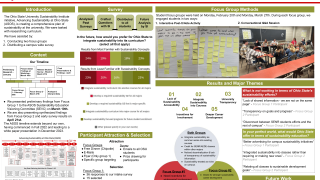
Hitzhusen, GregoryEmail:franco.65@osu.eduPrimary Department/Unit:School of Environment and Natural ResourcesProducts:ENRAEDE4567_StudentPerspectives_sp2023_poster.pdf , ENRAEDE4567_StudentPerspectives_sp2023.pdfProject Description:This report details the research our capstone group conducted for our community partner, The Ohio State University Sustainability Institute, collecting student opinions on the ideal future for sustainability education at the university. In the fall of 2022, the Sustainability Institute began an initiative called Advancing Sustainability at Ohio State (ASOS) with the goal of transforming the university into a nationwide leader in sustainability. We were tasked with gathering insights from current Ohio State students into their ideal future of sustainability education at the university to inform the planning of this ASOS initiative. We conducted research via two one-hour focus group sessions and a survey which was distributed to all current undergraduate and graduate students. From our engagement with students, we derived five major themes: a lack of sustainability accessibility, a desire for integration of sustainability into current courses, a need for university transparency, a recommendation to incentivize widespread student involvement, and a need for more sustainability career development. Our key recommendations include integrating sustainability into existing courses, creating a centralized source of sustainability information, and publishing data about current university sustainability initiatives.Project Type:Campus as Living LabSustainability Topic Area:Built Environment, EducationProject Location:40.005667980345, -83.028123378754
- Sustainable Initiative & Emission Reduction Research for the City of Bexley, Ohio: Commercial & Institutional SectorsIrene Posada
Sustainable Initiative & Emission Reduction Research for the City of Bexley, Ohio: Commercial & Institutional Sectors
Close dialogProject Lead:Irene PosadaCompletion Date:Class Association:ENRAEDE 4567Collaborators:Posada, Irene
Zenko, Addy
Baxley, Chris
Nigro, Liam
Teague, Brandon
Annandono, Cara
Braine, Bruce
Hitzhusen, GregoryEmail:posadamerida.1@osu.eduPrimary Department/Unit:School of Environment and Natural ResourcesProject Description:City leaders called upon this Capstone group to create a compendium of recommendations to lower emissions based on other cities' initiatives, focusing on high-emission areas: electricity, stationary and mobile combustion. Our research focused on identifying actionable steps that Bexley can take to achieve carbon neutrality, and eventually, carbon negativity, while incorporating best practices of justice, equity, diversity, and inclusion (JEDI) for the commercial and industrial sectors. Through the literature review and informational interviews, we were able to collect a myriad of exemplary initiatives that Bexley can replicate within the report and our climate action plan matrix. We recommend Bexley integrates into greater Columbus plans, continues partnership with future capstone and climate-driven organizations, and continues implementing the initiatives through assessing its JEDI components.Project Type:Project with Partner OrganizationSustainability Topic Area:Climate Health, Built EnvironmentProject Location:39.964879861678, -82.9363578
Sustainable Spaces on Campus: Reading Room and Solar HouseAlayna CallSustainable Spaces on Campus: Reading Room and Solar House
Close dialog
Project Lead:Alayna CallCompletion Date:Class Association:ENRAEDE 4567Collaborators:Contento, Myrah
Kraus, Sophie
McLoughlin, Brooke
Sullivan, Will
Wygant, Nicole
Braine, Bruce
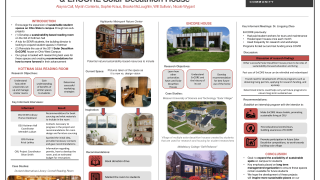
Hitzhusen, GregoryEmail:call.136@osu.eduPrimary Department/Unit:School of Environment and Natural ResourcesProducts:ENRAEDE4567_SustainableSpaces_sp2023.pdf , ENRAEDE4567_SustainableSpaces_sp2023_poster.pdfProject Description:The goal of our project is to encourage the expansion of sustainable student spaces on Ohio State's Main Campus through two sub-projects. The first is to develop a sustainability based reading room on the third floor of Kottman hall. Kottman Hall is a hub for students in the School of Environment and Natural resources, the building director is looking to expand student spaces in Kottman. The second sub-project is to reinstate the use of the 2011 Solar Decathlon EnCORE house on Ohio State's West Campus. Our group is tasked with researching best uses for these spaces and creating recommendations for how to move forward in advancing the spaces.Project Type:Living Lab ResearchSustainability Topic Area:Built EnvironmentProject Location:40.010668757483, -83.034464120865
- Reducing Residential Greenhouse Gas Emissions in the City of Bexley, OhioAbby Thiel
Reducing Residential Greenhouse Gas Emissions in the City of Bexley, Ohio
Close dialogProject Lead:Abby ThielCompletion Date:Class Association:AEDECON 4567Collaborators:Straub, Tabitha
Isaacs, Rachel
Huntsman, Jayden
Walker, Lauren
Chen, Savannah (Yuanyuan)
Braine, Bruce
Hitzhusen, GregoryEmail:thiel.115@buckeyemail.osu.eduPrimary Department/Unit:School of Environment and Natural ResourcesProducts:ENRAEDE4567_ResidentEmissionsBexley_sp2023_poster.pdf , ENRAEDE4567_ResidentEmissionsBexley_sp2023.pdfProject Description:The City of Bexley is in the process of creating a Climate Action Plan (CAP) to achieve net zero greenhouse gas (GHG) emissions by the year 2040. Our capstone group developed a set of actionable recommendations that the City can use to reduce GHG emissions specific to residences. We based our recommendations on best practices to reduce residential GHG emissions that may be applied in the City of Bexley. Our recommendations cover the focus areas of electricity consumption; stationary combustion; mobile combustion; and Justice, Equity, Diversity, and Inclusion (JEDI). We conducted online case study research on other cities' GHG emission reduction programs for each focus area. We then conducted informal interviews with cities of interest. Our recommendations describe different community education and engagement programs for each focus area that the City can use in determining residential GHG emission reduction strategies for its CAP.Project Type:Project with Partner OrganizationSustainability Topic Area:Climate Health, Built EnvironmentProject Location:39.955405471414, -82.9377361
Invasive Bush Honeysuckle Removal Coalition ProposalJeremy BrooksInvasive Bush Honeysuckle Removal Coalition Proposal
Close dialog
Project Lead:Jeremy BrooksCompletion Date:Class Association:ENR 2367Collaborators:Phillipe Kenny
Euan Rae
Natalie Roemer
Alex Straubing
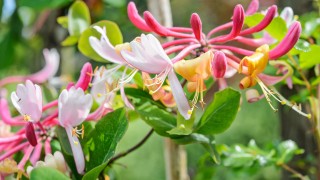
Cameron SvobodaEmail:Brooks.719@osu.eduProducts:ENR2367_invasivehoneysuckle_aut2013.pdfProject Description:The objective of this paper is to communicate to the general public the importance of the removal of nonnative honeysuckle from Ohio ecosystems. With a cohesive plan that links together organizations that have already performed successful operations, and willing student volunteers, we believe we can create a lasting partnership that will keep Bush Honeysuckle under control.Project Type:Campus as Living LabSustainability Topic Area:Climate Health, Natural EnvironmentProject Location:40.014609388281, -83.017249166442
Olentangy Bottomland Hardwood Forest Trail: A Beneficial and Sustainable DevelopmentGregory HitzhusenOlentangy Bottomland Hardwood Forest Trail: A Beneficial and Sustainable Development
Close dialog
Project Lead:Gregory HitzhusenCompletion Date:Class Association:ENR 2367Collaborators:Samuel Eckert
Elizabeth George
Sally Herman
Alyssa Martin
Ben Rubinoff
Vicki Garrett
Jeremy Brooks
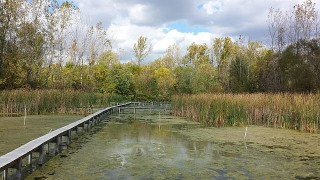
Kristen ShearerEmail:hitzhusen.3@osu.eduProducts:ENR2367_BHF_Trail_aut2013.pdfProject Description:The Ohio State University Wetlands currently offer many research and educational opportunities. However, we believe that the bottomland hardwood forest in the Wetlands is not being used to its fullest potential. This site, if used properly, allows for additional educational and recreational opportunities. We propose that constructing a hiking trail spanning a large portion of the bottomland hardwood forest will make this ecosystem a useful resource for both OSU students and the Columbus community. The trail will provide educational opportunities, increase environmental awareness, and improve and enhance the character of the communityProject Type:Campus as Living LabSustainability Topic Area:Climate Health, Built Environment, Natural EnvironmentProject Location:40.019734963361, -83.018428801867
Ohio State University's Wetlands Watercolors Eco Art Exhibition ProposalGregory HitzhusenOhio State University's Wetlands Watercolors Eco Art Exhibition Proposal
Close dialog
Project Lead:Gregory HitzhusenCompletion Date:Class Association:ENR 2367Collaborators:Jacquelyn Cole
Victoria Nabors
Shawn O’Connor
Erin Nelson
Kevin Inks
Jeremy Brooks
Vicki Garrett
Kristen ShearerEmail:hitzhusen.3@osu.eduProducts:ENR2367_Watercolors-Project_aut2013.pdfProject Description:A proposal for the implementation of an environmental art show at the Ohio State University's Wetlands.Project Type:Campus as Living LabSustainability Topic Area:Built Environment, Natural EnvironmentProject Location:40.01980069645, -83.018497467401
Miller Ecological Park Field RestorationGregory HitzhusenMiller Ecological Park Field Restoration
Close dialog
Project Lead:Gregory HitzhusenCompletion Date:Class Association:ENR 2367Collaborators:Crystina Bakus
Callie Nauman
Jim Palus
Sidney Rucker
Lauren Stewart
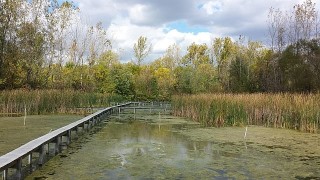
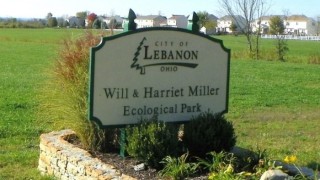
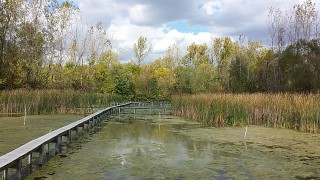
Jeremy BrooksEmail:hitzhusen.3@osu.eduProject Description:This project was created to guide The Miller Ecological Park Board to restore the newly purchased thirty-acre soybean field into a self-sustainable park.Project Type:Project with Partner OrganizationSustainability Topic Area:Climate Health, Natural EnvironmentProject Location:39.453487110763, -84.218127251752
Heffner Wetland Facility Roof GardenGregory HitzhusenHeffner Wetland Facility Roof Garden
Close dialog
Project Lead:Gregory HitzhusenCompletion Date:Class Association:ENR 2367Collaborators:Scott Miller
Milana Novgorodsky
Cameron Roberts
Sam Schumann
Logan Walter
Jeremy Brooks
Vicki Garrett
Kristen SheaerEmail:hitzhusen.3@osu.eduProducts:ENR2367_wetlandroofgarden_aut2013.pdfProject Description:A green roof at the Heffner building, located at the Wilma H. Scheiermeier Olentangy River Wetland Park, would benefit the University and the surrounding community socially, economically, and ecologically. Using student research, this project outlines a plan for the construction of a roof garden on top of the Heffner facility.Project Type:Sustainable CampusSustainability Topic Area:Built Environment, Natural EnvironmentProject Location:40.018973197911, -83.019615412127
Energy Audit: Reducing the Carbon Footprint of the Olentangy Wetlands Reserve BuildingGregory HitzhusenEnergy Audit: Reducing the Carbon Footprint of the Olentangy Wetlands Reserve Building
Close dialog
Project Lead:Gregory HitzhusenCompletion Date:Class Association:ENR 2367Collaborators:Christian Cottington
Adam Nolan
Theresa Rice
Ryan Walling
Corey Wetherby
Jeremy Brooks
Vicki Garrett
Kristen ShearerEmail:Hitzhusen.3@osu.eduProducts:ENR2367_teamenergy_aut2013.pdfProject Description:Team Energy focuses on a small scale approach to carbon reduction at The Wilma H. Shiermeier Olentangy River Wetland Research Park. This project provides a plan for which decision makers at the wetlands can reference in order to reduce the overall carbon footprint of the park. We hope that this project serves as an educational took to set Ohio State apart as an example of sustainability and energy conservation.Project Type:Campus as Living LabSustainability Topic Area:Built Environment, Sustainable EnergyProject Location:40.020082207106, -83.01863050523
The Riverfront Recreation and Education FacilityGregory HitzhusenThe Riverfront Recreation and Education Facility
Close dialog
Project Lead:Gregory HitzhusenCompletion Date:Class Association:ENR 2367Collaborators:Kelly Peterson
Ariel Ruzicka
Elizabeth Watson
Jamie Westhoven
Jeremy Brooks
Jason TuckerEmail:Hitzhusen.3@osu.eduProducts:ENR2367_RREF_sp2014.pdfProject Description:The Riverfront Recreation and Education Facility is part rental center, part classroom, and is designed to bring people to the new Olentangy Riverfront, emphasize active learning and growing, and serve as an example for future sustainable designs on Ohio State’s campus.Project Type:Campus as Living LabSustainability Topic Area:Climate Health, Sustainable ResourcesProject Location:39.998968989956, -83.023677885794
Green Space Along the Olentangy River CorridorGregory HitzhusenGreen Space Along the Olentangy River Corridor
Close dialog
Project Lead:Gregory HitzhusenCompletion Date:Class Association:ENR 2367Collaborators:Hunter Ardrey
Michael Bean
Melanie Fowler
Morgan Oberly
Email:hitzhusen.3@osu.eduProducts:ENR2367_Greenspace_sp2014.pdfProject Description:This project proposes a green space near the planned CFAES campus when it moves to the east side of the river. This space will provide a recreational space for students and a healthy riparian ecosystem along the river corridor.Project Type:Campus as Living LabSustainability Topic Area:Climate Health, Built Environment, Natural EnvironmentProject Location:39.999113640738, -83.022905408288
Building a Better KottmanGregory HItzhusenBuilding a Better Kottman
Close dialog
Project Lead:Gregory HItzhusenCompletion Date:Class Association:ENR 2367Collaborators:Elizabeth Greenslade
Aly Gordon
James Ryan
Hannah Maurer
Jeremy BrooksEmail:hitzhusen.3@osu.eduProducts:ENR2367_NewKottman_sp2014.pdfProject Description:This project proposes building design principles for the structure that will replace the current Kottman Hall. Ideas center around various aspects of biophilic design and their numerous physical and psychological benefits.Project Type:Campus as Living LabSustainability Topic Area:Built Environment, Sustainable ResourcesProject Location:40.002713849551, -83.026850938772
Planning for a Sustainable Riverside Café at Ohio StateGregory HitzhusenPlanning for a Sustainable Riverside Café at Ohio State
Close dialog
Project Lead:Gregory HitzhusenCompletion Date:Class Association:ENR 2367Collaborators:Lindsay Agnew
Sara Toskin
Amber Miller
Colleen Bloss
Kayla Goldberg
Jeremy BrooksEmail:hitzhusen.3@osu.eduProducts:ENR2367_SP14_RiversideCafe.pdfProject Description:This document is a preliminary plan for a riverside sustainable café as part of the migration of the College of Food, Agricultural, and Environmental Sciences to the Ohio State University central campus. The proposal emphasizes connecting the café to the three University discovery themes: energy and environment, food production and security, and health and wellness. Logistics, structure, design, and discussion of similar cafés is included.Project Type:Campus as Living LabSustainability Topic Area:Built Environment, Sustainable ResourcesProject Location:40.002696975375, -83.024793686054
Olentangy River amphitheater proposalGregory HitzhusenOlentangy River amphitheater proposal
Close dialog
Project Lead:Gregory HitzhusenCompletion Date:Class Association:ENR 2367Collaborators:Jacob Bradshaw
Seth Collingwood
Mickey Croxton;
Reid Fu
Thomas Rhodes
Jeremy BrooksEmail:hitzhusen.3@osu.eduProducts:ENR2367_SP14_Amphitheater.pdfProject Description:This paper details the proposal of the construction of an amphitheater along the Olentangy River near the new College of Food, Agriculture, and Environmental Science (CFAES) campus at The Ohio State University. A comprehensive analysis of the amphitheater’s potential use, design, maintenance, funding, and environmental impact are explored. Benefits and drawbacks of the project are also investigated from the perspective of the CFAES, OSU, students and staff, as well as the greater Columbus community.Project Type:Campus as Living LabSustainability Topic Area:Built Environment, Natural EnvironmentProject Location:40.006063165464, -83.026098310947
Student involvement at The Ohio State University's Wetland Research ParkAparna DialStudent involvement at The Ohio State University's Wetland Research Park
Close dialog
Project Lead:Aparna DialCompletion Date:Class Association:ENR 4567Collaborators:Erin O’Shaughnessey
Jack Craig
Catherine Draves
Gabe Domecus
Kaylina RuthEmail:Dial.15@osu.eduProject Description:Increasing student involvement at The Wilma H. Schiermeier Olentangy River Wetland Research Park on The Ohio State University's campus would provide many benefits to both the university and the students. Increasing student involvement would provide students with volunteer experience as well as introduce them to wetland ecosystems. It would also provide maintenance work which would assist the Research Park. In order to increase involvement we propose that a new student organization be created at Ohio State.Project Type:Campus as Living LabSustainability Topic Area:Climate Health, Natural EnvironmentProject Location:40.019773273068, -83.018252849415
Sustainable Urban Agriculture for ColumbusGregory HitzhusenSustainable Urban Agriculture for Columbus
Close dialog
Project Lead:Gregory HitzhusenCompletion Date:Class Association:ENR 4567Collaborators:Rachel McKinley
Ashley Weller
Elena IrwinEmail:hitzhusen.3@osu.eduProject Description:A student team research project for a class titled Assessing Sustainability. This project assesses the sustainability of urban agriculture in Columbus, Ohio.Project Type:Project with Partner OrganizationSustainability Topic Area:Built Environment, Sustainable ResourcesProject Location:39.986106860611, -82.997267783212
Garden classroom proposalGregory HitzhusenGarden classroom proposal
Close dialog
Project Lead:Gregory HitzhusenCompletion Date:Class Association:ENR 4567Collaborators:William Wilber
Kristina Bomberger
Bridget O’Banion
Jake Marina
Cory Novak
Jeremy BrooksEmail:hitzhusen.3@osu.eduProject Description:With plans to move the College of Food, Agricultural, and Environmental Sciences across the river, Ohio State has a unique opportunity to develop new, innovative projects on the campus. This paper proposes the idea of incorporating an educational garden. The garden could be used for education, relaxation, or community outreach purposes.Project Type:Campus as Living LabSustainability Topic Area:Climate Health, Built EnvironmentProject Location:40.003117757836, -83.027531681873
Columbus Climate Adapatation PlanGregroy HitzhusenColumbus Climate Adapatation Plan
Close dialog
Project Lead:Gregroy HitzhusenCompletion Date:Class Association:ENR 4567Collaborators:Alexandra Kueller
Nate Hardin
Brett Baughman
Elena IrwinEmail:hitzhusen.3@osu.eduProducts:ENRAEDE4567_ClimateAdapt_sp2014.pdfProject Description:Our project focuses on finding out what it would take for the City of Columbus to successfully implement a climate adaptation plan and what are the proper steps to take when implementing such a plan.Project Type:Project with Partner OrganizationSustainability Topic Area:Built Environment, Sustainable Resources, Sustainable EnergyProject Location:39.983099963808, -82.988201648259
Greening the Energy Supply: Transportation, A Policy Recommendation and Research Guide for Columbus Green TransportationGregory HitzhusenGreening the Energy Supply: Transportation, A Policy Recommendation and Research Guide for Columbus Green Transportation
Close dialog
Project Lead:Gregory HitzhusenCompletion Date:Class Association:ENR 4567Collaborators:Patrick Laser
Tyler Palmer
Ryan Wampler
Elena IrwinEmail:hitzhusen.3@osu.eduProject Description:The purpose of this research is to determine what policies and incentives the City of Columbus might pursue in order to help transition its local energy supply for transportation toward the use of renewable, less carbon-intensive, and less toxic alternatives. This report also assesses the viability of the STAR Communities rating system as a measure of the City of Columbus’ sustainability as it relates to transportation.Project Type:Project with Partner OrganizationSustainability Topic Area:Sustainable EnergyProject Location:39.983223247753, -82.9907458
Green Market Development Spring '14Gregory HitzhusenGreen Market Development Spring '14
Close dialog
Project Lead:Gregory HitzhusenCompletion Date:Class Association:ENR 4567Collaborators:Alex Pore
Ross Igoe
Vincent ValentinoEmail:hitzhusen.3@osu.eduProject Description:An analysis of Columbus' green building stock and the City's initiatives related to green building growth. Benchmarking four city leaders in sustainability related to buildings, the research team presents four strategic recommendations for the City of Columbus' consideration.Project Type:Project with Partner OrganizationSustainability Topic Area:Built Environment
Creating the infrastructure for a living laboratory at the Miller Ecological Park and other preparationsGregory HitzhusenCreating the infrastructure for a living laboratory at the Miller Ecological Park and other preparations
Close dialog
Project Lead:Gregory HitzhusenCompletion Date:Class Association:ENR 2367Collaborators:Travis Copeland
Rachael Dininger
Alissa Finke
Courtney Fisher
Monica SheakleyEmail:hitzhusen.3@osu.eduProducts:ENR2367_MEPLivingLab_au2014.pdfProject Description:Our goal is to connect the local children of Lebanon, Ohio with nature via the Miller Ecological Park. To do this, we are focusing on the addition of a Living Laboratory to the property that can be used by local schools and Boy/Girl scout groups. The Living Laboratory will consist of an interactive trail that connects Bowman Elementary School to a restored prairie and wetlands at the southeastern corner of the MEP. We also are suggesting infrastructure additions to supplement the educational experience of local children through proper integration with school curriculums.Project Type:Project with Partner OrganizationSustainability Topic Area:Built Environment, Natural EnvironmentProject Location:39.453127991227, -84.218723773956
Enhancing Learning Opportunities at the Wilma H. Schiermeier WetlandsVicki GarrettEnhancing Learning Opportunities at the Wilma H. Schiermeier Wetlands
Close dialog
Project Lead:Vicki GarrettCompletion Date:Class Association:ENR 2367Collaborators:Thomas Fortunato
Magaret McMahan
Reid Powers
Shane Staton
Clayton VranicEmail:Garrett.95@osu.eduProducts:ENR2367_WetlandLearningOpps_au2014.pdfProject Description:In this project we analyzed what the possibility and benefits would be if there were to be more classes added to the wetlands.Project Type:Campus as Living LabSustainability Topic Area:Natural EnvironmentProject Location:40.019718428778, -83.0184674263
Implementing Invasive Management at The Wilma H. Schiermeier Olentangy River Wetland Research Park and Involving the CommunityGregory HitzhusenImplementing Invasive Management at The Wilma H. Schiermeier Olentangy River Wetland Research Park and Involving the Community
Close dialog
Project Lead:Gregory HitzhusenCompletion Date:Class Association:ENR 2367Collaborators:Monica Komorowski
Roni Levine
Qingzi Luo
Jeremy Brooks
Vicki Garrett
John GraysonEmail:hitzhusen.3@osu.eduProducts:ENR2367_Invasives_au2014.pdfProject Description:Currently, there is no plan of invasive management at The Wilma H. Schiermeier Olentangy River Wetland Research Park. This project provides the framework for community involvement through volunteer led invasive management at the research park.Project Type:Campus as Living LabSustainability Topic Area:Natural EnvironmentProject Location:40.020064851299, -83.018703460039
Improving Bird Watching at the Ohio State University Wetlands: Columbus, OHAparna DialImproving Bird Watching at the Ohio State University Wetlands: Columbus, OH
Close dialog
Project Lead:Aparna DialCompletion Date:Class Association:ENR 2367Collaborators:Adam Ares
Scott Filippelli
Ryan Hallowell
Brad JonesEmail:Dial.15@osu.eduProducts:ENR2367_BirdWatching_au2014.pdfProject Description:We propose that the Olentangy River Wetlands Research Park install six birdhouses designed to attract bluebirds, black-capped chickadees, and wood ducks. Three of these birdhouses will have live streaming video cameras installed, and the video feed will be displayed in the wetlands lobby. This feature will add renewed interest in the wetlands and will attract new visitors.Project Type:Sustainable CampusSustainability Topic Area:Natural EnvironmentProject Location:40.019900935077, -83.018214224394
A Self-Guided Tour at the Olentangy Wetland Research ParkJeremy BrooksA Self-Guided Tour at the Olentangy Wetland Research Park
Close dialog
Project Lead:Jeremy BrooksCompletion Date:Class Association:ENR 2367Collaborators:Jeremie Beverstock
Hannah Jewell
Clay Rowley
Chet Saum
Mikaela Tardivo
John GraysonEmail:brooks.719@osu.eduProducts:ENR2367_SelfGuidedTourGroup_au2014.pdfProject Description:The Wilma H. Schiermeier Olentangy River Wetland Research Park (ORWRP) is a valuable site of research and educational opportunities for the Ohio State University community. It also provides a rare opportunity for members of the greater Columbus community to observe and learn about an ecosystem that they would not otherwise encounter in an urban environment. However, the facility remains underutilized by the public. By welcoming visitors and offering a self-guided tour, the ORWRP can become a more accessible and desirable site of informal science learning.Project Type:Sustainable CampusSustainability Topic Area:Natural EnvironmentProject Location:40.01995516214, -83.018703460366
Effective Sign Content at The Wilma H. Schiermeier Olentangy River Wetland Research Park PavilionGregory HitzhusenEffective Sign Content at The Wilma H. Schiermeier Olentangy River Wetland Research Park Pavilion
Close dialog
Project Lead:Gregory HitzhusenCompletion Date:Class Association:ENR 2367Collaborators:Ryan Center
Wesley Morris
Orlando Ortigoza
Donny Smith
Jeremy BrooksEmail:hitzhusen.3@osu.eduProducts:ENR2367_WetlandSignage_au2014.pdfProject Description:This is a suggestion based paper for effective signage at The Ohio State University Wetland's pavilion through the evaluation of previous signs and research of successful signage content.Project Type:Campus as Living LabSustainability Topic Area:Climate Health, Natural EnvironmentProject Location:40.020508841024, -83.019804238274
Accomplishing Outreach, Engagement & Facilitating Learning: A Digital Application for the Wilma H. Schiermeier Olentangy River Wetland Research ParkGregory HItzhusenAccomplishing Outreach, Engagement & Facilitating Learning: A Digital Application for the Wilma H. Schiermeier Olentangy River Wetland Research Park
Close dialog
Project Lead:Gregory HItzhusenCompletion Date:Class Association:ENR 2367Collaborators:Robin Iritz
Rachel Metzler
Mara Momenee
Graham Spangler
Brian Trainor
Jeremy BrooksEmail:hitzhusen.3@osu.eduProducts:ENR2367_InteractiveWetlands_au2014.pdfProject Description:The Wilma H. Schiermeier Olentangy River Wetland Research Park (ORWRP) is world-renowned, but few people in the Columbus area choose to visit the research facility. In order to address the lack of visitation at the ORWRP and increase the public's understanding of wetlands ecosystems, this project proposes the development of an interactive smartphone application. The application will serve as a self-guided tour of the park that focuses on communicating the functions and importance of wetland ecosystems.Project Type:Campus as Living LabSustainability Topic Area:Climate Health, Natural EnvironmentProject Location:40.019698811539, -83.018308639985
Ohio State Olentangy River Wetland Research Park Bioreserve Pond TransformationGregory HitzhusenOhio State Olentangy River Wetland Research Park Bioreserve Pond Transformation
Close dialog
Project Lead:Gregory HitzhusenCompletion Date:Class Association:ENR 2367Collaborators:Stphanie Hyland
Marisa Murphy
Terek Akkari
Alexis Paden
Ajla Karalic
Jeremy Brooks
John GraysonEmail:hitzhusen.3@osu.eduProducts:ENR2367_BioreservePond_au2014.pdfProject Description:In this report, we summarize the importance of wetlands for the environment, for industry, and for the basic needs of animals and humans alike. We discuss the significance that early childhood education holds for the understanding and future conservation of this vital ecosystem. We created a child-friendly, interactive curriculum utilizing the bioreserve pond, lobby exhibit, and other supplemental activities for visiting schools. By outlining the Ohio Science Standards for our target age group, grades K-3, we established a set of goals and expectations for the interactive activity. In order to meet these goals, and provide an easy to use and flexible guide for tour groups, we developed a lesson plan and instructor outline that includes suggested areas for discussion and assessments that will reinforce what the students learn and experience. The report also addresses social, economic, and environmental concerns including possible funding sources and the mitigation of environmental impacts.Project Type:Campus as Living LabSustainability Topic Area:Natural EnvironmentProject Location:40.019768857964, -83.018488883154
- Soil quality and hardwood forest regeneration in the Big Darby Creek headwaters of Logan County, OhioRoger Williams
Soil quality and hardwood forest regeneration in the Big Darby Creek headwaters of Logan County, Ohio
Close dialogProject Lead:Roger WilliamsCompletion Date:Collaborators:Crytina BakusEmail:williams.1577@osu.eduProducts:ENRIndSt_BigDarbyCreek_au2014.pdfProject Description:This study was to research soil properties that might affect the regeneration of hardwood trees in old agricultural fields located at The Big Darby Creek Headwaters Nature Preserve in Logan County, Ohio. The aim was to determine, by sampling soil properties in the surrounding hardwood forests along with the soil properties of the old agriculture fields, any significant differences that might explain the slower regeneration of hardwood forest tree species in the old agriculture fields. Hardwood forest is the intended and desired land cover for the preserve, and is believed to be the best land cover for the headwaters of Big Darby Creek in this particular area.Project Type:Living Lab ResearchSustainability Topic Area:Climate Health, Natural EnvironmentProject Location:39.94262791777, -83.2572608
Bike ColumbusGregory HitzhusenBike Columbus
Close dialog
Project Lead:Gregory HitzhusenCompletion Date:Class Association:ENR 4567Collaborators:Rebecca Poser
Harrison Morgenstern
Lindsey Eckert
Margeaux Apple
Lindsay Lingfelter
Neil Drobny
Fred HitzhusenEmail:hitzhusen.3@osu.eduProducts:ENRAEDE4567_BikeColumbus_sp2015.pdfProject Description:This projects analyzes the feasibility of Columbus doubling its bike share program between 2015 and 2020, quantifying the increases in bicycle miles traveled, calories burned, carbon offset, and cumulative cost. The City's main projection is a lower-bound estimate, as other cities have experienced much higher ranges benefits from doubling their bike share programs. This report also analyzes how Columbus can improve equity through bike sharing programs and bike services.Project Type:Project with Partner OrganizationSustainability Topic Area:Built Environment, Sustainable Energy
Smart Trips: Marketing Alternative Transportation in the City of Columbus, OhioGregory HitzhusenSmart Trips: Marketing Alternative Transportation in the City of Columbus, Ohio
Close dialog
Project Lead:Gregory HitzhusenCompletion Date:Class Association:ENR 4567Collaborators:Sarah Moore
Rebecca Goffe
Alyssa O'Connor
Cameron Roberts
Ryan Thompson
Neil DrobnyEmail:hitzhusen.3@osu.eduProject Description:The following report will assess the feasibility of implementing a Smart Trips program in the city of Columbus. This analysis includes the environmental, social and economic costs and benefits associated with a Smart Trips program, as examined through two case studies: Knoxville, Tennessee and Portland, Oregon.Project Type:Project with Partner OrganizationSustainability Topic Area:Built Environment, Sustainable Energy- Energy Efficiency IncentivesGregory Hitzhusen
Energy Efficiency Incentives
Close dialogProject Lead:Gregory HitzhusenCompletion Date:Class Association:ENR 4567Collaborators:Ashley Williams
Molly Hesness
Peter Moshier
Arthur McCleese
Tyler WIllisEmail:hitzhusen.3@osu.eduProject Description:A semester long research project centered around identifying best practices and barriers to implementing effective municipal energy efficiency incentives.Project Type:Living Lab ResearchSustainability Topic Area:Sustainable Energy
Home and Business Energy ReductionGregory HitzhusenHome and Business Energy Reduction
Close dialog
Project Lead:Gregory HitzhusenCompletion Date:Class Association:ENR 4567Collaborators:Shawn O'Connor
Brenda Quinn
Matt Unger
Ryan Walling
Corey WetherbyEmail:hitzhusen.3@osu.eduProject Description:The focus of our project is to reduce energy consumption community-wide by 20% over the next five years within the residential and commercial sectors. This 20% reduction is a goal within Green Memo III, set forth by the City of Columbus and Mayor Michael B. Coleman. Focusing on five objectives, we conducted research, gathered data on best practices from cities that have been making strides in this area, reached out to key energy providers, and provided a cost-benefit analysis on the financial feasibility of our goals. We hope to advise Columbus decision makers on how to effectively target homes and commercial buildings in order to market energy efficiency programs. We believe these programs will effectively reduce overall energy consumption and greenhouse gas (GHG) emissions for the City of Columbus.Project Type:Living Lab ResearchSustainability Topic Area:Built Environment, Sustainable Energy
Onsite Renewable Energy IncentivesGregory HitzhusenOnsite Renewable Energy Incentives
Close dialog
Project Lead:Gregory HitzhusenCompletion Date:Class Association:ENR 4567Collaborators:Rebecca Mellino
Ali Clunk
Vanessa Lopez
Rayan Hafouche
Colleen Bloss
Neil DrobnyEmail:hitzhusen.3@osu.eduProject Description:Our team looked to find ways to implement an incentive program for renewable energy for the City of Columbus, Ohio and to make a recommendation for the next steps the city could take to achieve their carbon emission reduction goals laid out in Green Memo IIIProject Type:Living Lab ResearchSustainability Topic Area:Climate Health, Sustainable Energy- City of Columbus Green Memo III: Municipal Building Energy ManagementGregory Hitzhusen
City of Columbus Green Memo III: Municipal Building Energy Management
Close dialogProject Lead:Gregory HitzhusenCompletion Date:Class Association:ENR 4567Collaborators:Eric Van Deusen
Scott Semroc
Natalie McClaine
Jamie Westhoven
Cody GriffisEmail:hitzhusen.3@osu.eduProject Description:Green Memo III proposed sustainability objectives for the City of Columbus, Ohio to reach by 2020. This project evaluates goals to reduce energy consumption in municipal facilities through ENERGY STAR energy monitoring software and the implementation of Energy Conservation Measures.Project Type:Living Lab ResearchSustainability Topic Area:Built Environment, Sustainable Energy
Comprehensive Public TransportationGregory HitzhusenComprehensive Public Transportation
Close dialog
Project Lead:Gregory HitzhusenCompletion Date:Class Association:ENR 4567Collaborators:Nia Blevins
Taylor Clendenin
Carly Good
Caroline Jochum
Jodi Mescher
Neil DrobnyEmail:Hitzhusen.3@osu.eduProject Description:The overall goal of this report is to address Objective C.5. of Columbus’ Green Memo III to reduce the amount of people driving alone to work to 70% over the next five years through a comprehensive public transportation plan. This report takes a bird’s eye view of public transportation as the most logical approach in understanding steps Columbus should take to reach their goals. In order to achieve this, five cities were chosen as case studies to assess and compare various aspects of public transit as they relate to five categories: cars, buses, bikes, walkability and alternative (light rail, trolley, etc.). These cities were Indianapolis, Austin, Minneapolis, Charlotte, and Paris. Each were analyzed to determine best practices throughout all of the cities, as well as issues that each came across and why.Project Type:Living Lab ResearchSustainability Topic Area:Climate Health, Sustainable Energy
Green Job Training and Smart Roofs in Columbus, OhioGregory HitzhusenGreen Job Training and Smart Roofs in Columbus, Ohio
Close dialog
Project Lead:Gregory HitzhusenCompletion Date:Class Association:ENR 4567Collaborators:Jack Bowman
Laura Kington
Nicholas Julian
Ellen Grunewald
Elizabeth GreensladeEmail:hitzhusen.3@osu.eduProducts:ENRAEDE4567_GreenJobTraining_sp2015.pdfProject Description:This paper is a response to Goal B under the Green Memo III report by the city of Columbus. The thesis goal was to study green job training opportunities in Columbus Ohio and recommend a job training program for the city of Columbus that trained individuals in smart roof construction.Project Type:Campus as Living LabSustainability Topic Area:Climate Health, Sustainable Energy
COTA: Setting the StandardGregory HitzhusenCOTA: Setting the Standard
Close dialog
Project Lead:Gregory HitzhusenCompletion Date:Class Association:ENR 4567Collaborators:Gus Martin
Celina Laframboise
Destiny Cultice
Kayla Goldberg
Neil DrobnyEmail:hitzhusen.3@osu.eduProducts:ENRAEDE4567_COTA_sp2015.pdfProject Description:Final paper for the Environment, Economy, Development, and Sustainability capstone course. Analysis of potential greenhouse gas emissions reductions from reduced single-occupancy vehicle use as a result of potential COTA improvements. Includes benchmarking of various public transportation networks for customer service improvements and strategic recommendations for COTA.Project Type:Project with Partner OrganizationSustainability Topic Area:Sustainable Energy
Leaky Pipes, Leaky Wallet: A Look At OSU's Steam/Water Condensate Return SystemGregory HitzhusenLeaky Pipes, Leaky Wallet: A Look At OSU's Steam/Water Condensate Return System
Close dialog
Project Lead:Gregory HitzhusenCompletion Date:Class Association:ENR 4567Collaborators:Luke Howard
Katie Dorow
Luke Treece
Yidan Wang
Heather Bell
Sam AbdoulEmail:hitzhusen.3@osu.eduProject Description:One of The Ohio State University’s (OSU) goal is to reduce 5% potable water consumption per capita every five years and reset the baseline every five years thereafter.To achieve a 5% reduction in water consumption, H2 Block O’s research focuses on improving the efficiency of the steam condensate return system at McCracken Power Plant; a boiler plant that generates steam for 131 buildings on The Ohio State University’s campus. The motivation for this undertaking is to increase OSU’s water use rating with AASHE STARS, which is a tracking, assessment, and rating system used to measure sustainability among universities. The research objectives of this project include comparing McCracken’s current state to an efficient system, calculating a payback period analysis in order to weigh the decision-making process, and finally, the third objective is to make recommendations the university can embark on in the future to continue down a path of increased reduction in potable water consumption.Project Type:Campus as Living LabSustainability Topic Area:Built Environment, Sustainable Resources
Wexner Medical Center Waste Reduction ProposalGregory HitzhusenWexner Medical Center Waste Reduction Proposal
Close dialog
Project Lead:Gregory HitzhusenCompletion Date:Class Association:ENR 4567Collaborators:Daniel Woda
John Berger
Chris Donohue
Jaymes St Clair
Ryan Hallowell
Sam Abdoul
Theodore SaltosEmail:hitzhusen.3@osu.eduProject Description:The main task of this project was to research and develop a plan that created a pathway for the Ohio State University Medical Center (OSUMC) to reduce facility generated waste and improve sustainable operation through recycling, education, and reprocessing single-use medical devices. The project goal is to help OSUMC achieve a goal of minimizing waste in the near future.Project Type:Research CentersSustainability Topic Area:Climate HealthProject Location:39.993603641886, -83.019573569159
Local and Sustainable Food Purchasing at The Ohio State University: Capstone Course ProposalGraham SpanglerLocal and Sustainable Food Purchasing at The Ohio State University: Capstone Course Proposal
Close dialog
Project Lead:Graham SpanglerCompletion Date:Class Association:ENR 4567Collaborators:Kori Goldberg
Alayna
Andrew Goldsword
Anne Fruth
Dr. Gregory Hitzhusen
Sam AbdoulEmail:grahamrs94@gmail.comProject Description:The purpose of this project is to create a response to the university’s sustainability goals developed by the President and Provost’s Council on Sustainability in November 2015 at The Ohio State University in Columbus, Ohio. The specific scope of our project is to address the university’s goal to “increase production and purchase of locally and sustainably sourced food to 40% by 2025.” The methods to develop a response to the university included: quantitatively analyzing OSU’s 2016 Association for the Advancement of Sustainability in Higher Education Sustainability Tracking, Assessment & Rating System (AASHE STARS) report for Food and Beverage Purchasing, qualitatively assessing the present-day atmosphere around food at OSU, including meetings with Dining Services representatives and leaders in the School of Environment and Natural Resources, as well as researching the Real Food Challenge (RFC), deeming it an appropriate and necessary tool for the university to utilize. The results that the research group produced is the creation of an EEDS (Environment, Economics, Development, and Sustainability) Capstone course that focuses on the research and analysis of The Ohio State University’s purchasing and sourcing of local and sustainable food using the Real Food Calculator Framework, which is a tool used by students to track institutional purchasing over time. The baselining work that Ohio State would need to accomplish in order to achieve purchasing of 40% local and sustainable food is an undertaking in itself; the introduction of a new capstone will help the university utilize their resources in a financially responsible manner by allowing students to conduct and analyze this necessary research, as well as fill the growing demand for a thematic capstone course within the School of Environment and Natural Resources. Our team believes that the goal put forth by Ohio State is very ambitious, as the university has less than ten years to almost quadruple the percentage of local and sustainable food purchasing. No other universities reporting to AASHE of comparable financial resources and student enrollment to Ohio State are near 40% at this time. Leaders in local and sustainable food purchasing (Michigan State University and University of Texas at Austin) are currently at 21%. In order to achieve comparable results with these universities, The Ohio State University needs to conduct extensive baselining work and provide a mechanism that ensures transparency, accountability, and constant collaboration with involved stakeholders. We believe the capstone course will provide Ohio State with a financially responsible option of pursuing this goal. In addition to the course, we recommend that the University should sign the Real Food Campus Commitment. Signing the commitment will hold Ohio State accountable, provide a mechanism of transparency, and will enable the capstone course’s work to be viable in the decision making process.Project Type:Sustainable CampusSustainability Topic Area:Sustainable Resources, Circular EconomyProject Location:40.004134777023, -83.013489916921
Buckeyes for Buckeyes: Increasing the Tree Canopy on The Ohio State University's Main CampusGregory HitzhusenBuckeyes for Buckeyes: Increasing the Tree Canopy on The Ohio State University's Main Campus
Close dialog
Project Lead:Gregory HitzhusenCompletion Date:Class Association:ENR 4567Collaborators:Anna Koontz
Anna Madrishin
Kennedy Kowalski
Veronica Havran-Vena
Ryan Ludwig
Sam AbdoulEmail:hitzhusen.3@osu.eduProject Description:This report seeks to assist The Ohio State University with its goal of doubling the tree canopy by 2025. This report suggests either the revision or reworking of the goal due to issues with feasibility. It also suggests a new tree care policy based on case studies of similar universities which has stricter penalties for damage and encourages a campus culture of tree preservation, especially with regards to mature trees. A cost-benefit analysis for two possible planting scenarios was performed, and the non-monetary ecosystem and aesthetic benefits were far greater than the costs in each. A map of possible planting areas was also generated. Overall, this report provides Ohio State with both recommendations and a general framework for increasing the tree canopy on campus.Project Type:Sustainable CampusSustainability Topic Area:Built Environment, Natural EnvironmentProject Location:40.001077513047, -83.042715266347
The Ohio State University, Platinum Report (2018)Gregory HItzhusenThe Ohio State University, Platinum Report (2018)
Close dialog
Project Lead:Gregory HItzhusenCompletion Date:Class Association:ENR 4567Collaborators:James Heinen
Sammie Keitlen
Remy Pascine
Brandon Swanzer
Evan McElhinny
Sam AdboulEmail:hitzhusen.3@osu.eduProducts:ENRAEDE4567_AASHESTARS_sp2016.pdfProject Description:AASHE STARS is a sustainability framework that provides a method for higher education institutions to measure their sustainability performance. Institutions self-report data in a variety of categories that results in a score that is classified as a Bronze, Silver, Gold, or Platinum rating. The Ohio State University has recently implemented a set of sustainability goals that commit to improving its future sustainability outlook, which include a goal to achieve a Platinum rating by 2018. As of 2016, The Ohio State University's AASHE STARS submission earned an overall score of 72.53 points, which produced a Gold rating. In order to receive a Platinum rating, Ohio State must increase this score to 85 points by 2018. To reach this goal, Ohio State needs to focus on credits in heavily weighted areas where performance is lacking. The main areas of focus in this report are Academic Curriculum and Learning Outcomes, Food and Beverage Purchasing, Building Energy Consumption, Landscape Management, Purchasing, Waste Minimization and Diversion, and Water Use. After determining a projected score for each of these core areas, it was estimated that The Ohio State University would receive a score of 83.93 points by 2018. This projection falls short of the 85 points needed to attain a Platinum rating. If the university is truly committed to attaining a Platinum rating by 2018, there is a drastic need to accelerate its progress in the aforementioned core areas. In order for Ohio State to exceed these projections and achieve a Platinum rating, it is crucial to implement sustainability coursework into survey courses while also accelerating the progress of the university’s other sustainability goals.Project Type:Campus as Living LabSustainability Topic Area:Climate Health, Built Environment, Sustainable Resources, Natural Environment, Circular Economy, Sustainable EnergyProject Location:40.002293860274, -83.017438128591
Creating a Zero Waste Culture: Responsible Reuse and RecyclingGregory HitzhusenCreating a Zero Waste Culture: Responsible Reuse and Recycling
Close dialog
Project Lead:Gregory HitzhusenCompletion Date:Class Association:ENR 4567Collaborators:Taylor Faecher
Laura Hagler
John Johnson
Austin McKinley
Nicole Ratliff
Sam AbdoulEmail:hitzhusen.3@osu.eduProducts:ENRAEDE4567_ZeroWaste_sp2016.pdfProject Description:The project examines OSU's goal of zero waste by 2025 through minimizing waste, specifically involved with student life on the Columbus campus. Contamination of the recycling stream was also a vital concern for the university and is addressed in the report provided.Project Type:Campus as Living LabSustainability Topic Area:Sustainable ResourcesProject Location:40.002193697364, -83.017542148009
The Ohio State University Green Purchasing PolicyGregory HitzhusenThe Ohio State University Green Purchasing Policy
Close dialog
Project Lead:Gregory HitzhusenCompletion Date:Class Association:ENR 4567Collaborators:Kaitlyn Williams
Elizabeth George
Brain Trainor
Kristina BombergerEmail:hitzhusen.3@osu.eduProject Description:The goal of our project is to create a new green purchasing policy at The Ohio State University (OSU) to incorporate sustainability into the university’s purchasing decisions. With this policy we hope to meet the university’s sustainability goals, specifically to develop university-wide standards for targeted environmentally preferred products with full implementation by 2025.Project Type:Campus as Living LabSustainability Topic Area:Sustainable Resources, Circular EconomyProject Location:40.010544724767, -83.020957186818
Increasing Resident Interest in Sustainability in the City of Worthington, OhioJeremy BrooksIncreasing Resident Interest in Sustainability in the City of Worthington, Ohio
Close dialog
Project Lead:Jeremy BrooksCompletion Date:Class Association:ENR 4567Collaborators:Heather Harper
Rachael Dininger
Marisa Murphy
Emily ObringerEmail:Brooks.719@osu.eduProject Description:This report was done for the City of Worthington, Ohio. The purpose being to research ways to increase resident interest in sustainability.Project Type:Project with Partner OrganizationSustainability Topic Area:Climate HealthProject Location:40.094870431527, -83.02544465
A Communication Framework for Worthington's Sustainable InitiativesJeremy BrooksA Communication Framework for Worthington's Sustainable Initiatives
Close dialog
Project Lead:Jeremy BrooksCompletion Date:Class Association:ENR 4567Collaborators:Milana Novgorodsky
Gregory Goldberg
Greyson Rusher
Email:brooks.719@osu.eduProducts:ENRAEDE4567_CommunicationFramework_au2016.pdf , ENRAEDE4567_CommunicationFramework_au2016_0.pdfProject Description:We present a communication strategy for the City of Worthington to consider as it moves forward with the planning and implementation of a community sustainability framework.Project Type:Project with Partner OrganizationSustainability Topic Area:Built Environment, Sustainable EnergyProject Location:40.094870431527, -83.02544465
Municipal Energy Savings for the City of WorthingtonBruce BraineMunicipal Energy Savings for the City of Worthington
Close dialog
Project Lead:Bruce BraineCompletion Date:Class Association:ENR 4567Collaborators:Anthony Carlozzo
Marlene Moore
Matt Merchant
Mitch Gerhart
Jeremy BrooksEmail:Braine.3@osu.eduProject Description:This project is the result of a plan to audit the utility usage (gas, electric, water, and sewage) of six municipal buildings in the city of Worthington as well as perform on-site walkthroughs to develop a list of recommendations for the purpose of producing an outcome of overall reduction in energy usage and ultimately the associated costs with that. The goal of this project is propose recommendations that align with the city of Worthington’s sustainability initiatives that will allow for more flexibility within each municipal buildings’ budgets for future use.Project Type:Project with Partner OrganizationSustainability Topic Area:Sustainable EnergyProject Location:40.094870431527, -83.02544465
Solar Viability in the Historic District of WorthingtonBruce BraineSolar Viability in the Historic District of Worthington
Close dialog
Project Lead:Bruce BraineCompletion Date:Class Association:ENR 4567Collaborators:Aaron Rhodes
Lindsay Agnew
Tori Baron
Alex Cruz
Nick Neely
Jeremy BrooksEmail:Braine.3@osu.eduProject Description:This project explores the economic viability of introducing solar energy within the Historic District of Worthington, Ohio as well as energy efficiency measures for the municipality.Project Type:Project with Partner OrganizationSustainability Topic Area:Built Environment, Sustainable EnergyProject Location:40.094870431527, -83.02544465
Developing Alternative Transportation in Old WorthingtonBruce BraineDeveloping Alternative Transportation in Old Worthington
Close dialog
Project Lead:Bruce BraineCompletion Date:Class Association:ENR 4567Collaborators:Luca Costa
David Defer
Connor Herman
Tyler Hoerst
Nathan Shroyer
Jeremy Brooks
Ellen MaasEmail:Braine.3@osu.eduProject Description:This report covers the research and development of alternative transportation in the Old Worthington commercial district. The first objective of this report is exploring the costs and benefits of an electric vehicle charging station in Old Worthington. The second objective involves renovation of the multi-use path leading from the Olentangy Trail towards Old Worthington, as well as integrating bike signage into Worthington's wayfinding program.Project Type:Project with Partner OrganizationSustainability Topic Area:Built Environment, Sustainable EnergyProject Location:40.094870431527, -83.02544465
The City of Worthington Sustainability Action PlanCheryl FladungThe City of Worthington Sustainability Action Plan
Close dialog
Project Lead:Cheryl FladungCompletion Date:Class Association:ENR 4567Collaborators:Ellison Fellers
Emily Evans
Chyli Buenger
Mara Momenee
Jeremy Brooks
Ellen MaasEmail:Fladung.5@osu.eduProject Description:The purpose of this project was to develop a plan of action that will give the city of Worthington, Ohio the capacity to grow and develop sustainably into the future.Project Type:Project with Partner OrganizationSustainability Topic Area:Built Environment, Sustainable EnergyProject Location:40.093733085922, -83.018022179604
Market Analysis of Barriers to Electric Vehicle AdoptionGregory HitzhusenMarket Analysis of Barriers to Electric Vehicle Adoption
Close dialog
Project Lead:Gregory HitzhusenCompletion Date:Class Association:ENR 4567Collaborators:Brittany Bechhold
Sarah Fischer
Helena Rudoff
Carolyn Voigt
Chris GatesEmail:hitzhusen.3@osu.eduProject Description:This research report was completed by five students for a senior capstone course at the Ohio State University. This market study was developed in response to initiatives six through eight of the Smart Columbus Project, Priority Three: “Consumer EV Adoption." The primary task of this study was electric vehicle market research, including the study of available consumer options and supply- and demand-side barriers to adoption in Columbus, Ohio. The analysis used in this study sought to understand the current challenges within this market and develop recommendations for electric vehicle marketing strategies for the City.Project Type:Project with Partner OrganizationSustainability Topic Area:Circular Economy, Sustainable Energy
Case Study Analysis for the Strategic Implementation of Smart Street Lighting in the Linden Neighborhood of Columbus, OhioGregory HitzhusenCase Study Analysis for the Strategic Implementation of Smart Street Lighting in the Linden Neighborhood of Columbus, Ohio
Close dialog
Project Lead:Gregory HitzhusenCompletion Date:Class Association:ENR 4567Collaborators:Lydia Bednarski
Brittany Dodson
Gabriel Domecus
Addir Levine
Margaret OdiorneEmail:Hitzhusen.3@osu.eduProject Description:A case study analysis of four U.S. cities and their smart street lighting applications for a proposed pilot project in the Linden neighborhood of Columbus, Ohio through the Smart Cities grant.Project Type:Project with Partner OrganizationSustainability Topic Area:Built Environment
Smart Street Lighting: Campus PilotGregory HitzhusenSmart Street Lighting: Campus Pilot
Close dialog
Project Lead:Gregory HitzhusenCompletion Date:Collaborators:Rebecca Jennison
Cassandra Clifford
Cassidy Horency
Benjamin Black
Enrique Ng Zheng
Abdoul SamEmail:hitzhusen.3@osu.eduProducts:ENRAEDE4567_StreetLightingCP_sp2017.pdfProject Description:This report details a proposed, pilot project for The Ohio State University. This pilot can be used as a real-world example, or "test-case", for the City of Columbus and its smart street lighting efforts. This report includes explanations of recommended technologies (computer vision, dimming capabilities, and air quality monitoring), a proposed pilot location, campus/city receptivity data, and a cost estimate.Project Type:Campus as Living LabSustainability Topic Area:Built Environment, Sustainable Energy
Shaping a Sustainable Old WorthingtonGregory HitzhusenShaping a Sustainable Old Worthington
Close dialog
Project Lead:Gregory HitzhusenCompletion Date:Class Association:ENR 4567Collaborators:Gia Mancini
Madison Butcher
Rika Bailey
Marisa Searle
Vince GillEmail:hitzhusen.3@osu.eduProject Description:This project is a collaboration between the Old Worthington Partnership, Old Worthington merchants, American Electric Power (AEP), and the Sustainable Worthington Capstone Group from The Ohio State University’s Environment, Economy, Development, and Sustainability (EEDS) major. Old Worthington is located in the historic downtown of Worthington, Ohio. The Old Worthington Partnership is a volunteer group that aims to enhance the Old Worthington experience by pursuing collaboration, engagement, and sustainability. The Old Worthington Partnership reached out to this capstone group for assistance in implementing AEP’s Small Business Express Program among their eligible merchants.Project Type:Project with Partner OrganizationSustainability Topic Area:Built Environment, Sustainable Resources, Sustainable Energy
Smart Columbus Common Payment System: BenchmarkGregory HitzhusenSmart Columbus Common Payment System: Benchmark
Close dialog
Project Lead:Gregory HitzhusenCompletion Date:Class Association:ENR 4567Collaborators:Colleen Magee
Lindsay Steinbauer
Anne Dietrich
Mara Sheley
Amelia Garrision
Abdoul SamEmail:hitzhusen.3@osu.eduProducts:ENRAEDE4567_CommonPayment_sp2017.pdfProject Description:This project looks at the Smart Columbus initiative to improve transportation access though out Columbus and especially the Linden neighborhood. One initiative Columbus wishes to implement is a common payment system for transportation. Our team was responsible for researching existing payment systems in other cities and ranking these systems based on sustainable principles. We then provided recommendations to the city based on our research results.Project Type:Project with Partner OrganizationSustainability Topic Area:Climate Health
Feasibility of Electric Autonomous Shuttles in EastonNathan KleshinskiFeasibility of Electric Autonomous Shuttles in Easton
Close dialog
Project Lead:Nathan KleshinskiCompletion Date:Class Association:ENR 4567Collaborators:Taylor Berschet
William Boorn
Kiera Kratoville
Jordan Lempke
Dr. Gregory Hitzhusen
Abdoul SamEmail:Kleshinski.9@osu.eduProducts:ENRAEDE4567_EAVFeasibility_sp2017.pdfProject Description:As the winner of the United States Department of Transportation’s Smart City Challenge, Columbus, Ohio plans to deploy six electric autonomous vehicles (EAVs) throughout the Easton Town Center/Morse Rd. area. These EAVs will act as shuttles, and address the first-mile/last-mile issue involving lack of transport to a destination from a public transit drop-off point. This report employs a survey to determine the feasibility of EAV adoption in Columbus, Ohio - which has found implementation to be beneficial. Additionally, five EAV companies were researched to identify which is best for the Easton area.Project Type:Project with Partner OrganizationSustainability Topic Area:Sustainable Energy
Smart Columbus Grid Modernization: AMI Innovation AdoptionGregory HitzhusenSmart Columbus Grid Modernization: AMI Innovation Adoption
Close dialog
Project Lead:Gregory HitzhusenCompletion Date:Class Association:ENR 4567Collaborators:Amanda Echelberry
Matt Henderson
Miki Huber
Ryan Northern
Carly VanCuchaEmail:Hitzhusen.3@osu.eduProducts:ENRAEDE4567_GridModernization_sp2017.pdfProject Description:Advanced Metering Infrastructure (AMI) is an integrated system of smart meters, communication networks, and data management systems that enables two-way communication between utilities and customers. This technology is intended to improve efficiency, identify and respond to outages more efficiently, and better monitor and control the distribution system. The only way to see direct benefits of this technology is to engage with the new features it provides. This analysis highlights the strengths and weaknesses of AMI from the consumer perspective for marketing purposes for the City of Columbus as an extension of the Smart Columbus initiatives in order to capitalize on positive sustainable behavior changeProject Type:Project with Partner OrganizationSustainability Topic Area:Built Environment, Sustainable Energy
Economic Cost-Benefit Analysis of Smart LED Street Lights: Providing Free Public WiFi to the Linden NeighborhoodGregory HitzhusenEconomic Cost-Benefit Analysis of Smart LED Street Lights: Providing Free Public WiFi to the Linden Neighborhood
Close dialog
Project Lead:Gregory HitzhusenCompletion Date:Class Association:AEDE 4567Collaborators:Christina Vento
Dustin Kitchen
Eli Collinson
Katie Bilinski
Megan Fuerst
Abdoul SamEmail:hitzhusen.3@osu.eduProducts:ENRAEDE4567_StreetLights_sp2017.pdfProject Description:Cost-Benefit analysis of the provision of free WiFi into the Linden neighborhood through smart street lighting infrastructure.Project Type:Project with Partner OrganizationSustainability Topic Area:Built Environment, Sustainable Energy- Electric Autonomous Vehicle Case Study AnalysisGregory Hitzhusen
Electric Autonomous Vehicle Case Study Analysis
Close dialogProject Lead:Gregory HitzhusenCompletion Date:Class Association:ENR 4567Collaborators:Natalie Roemer
Sarah Jones
Michael Marino
Stephanie Hyland
Grant Southwood
Abdoul SamEmail:hitzhusen.3@osu.eduProject Description:The purpose of this report is to outline the research conducted by the EAV Benchmark/Case Study group as part of a collaboration between The Ohio State University’s Environment, Economy, Development, and Sustainability Capstone course and the City of Columbus’ Smart Columbus Project. The City of Columbus wishes to deploy a fleet of connected Electric Autonomous Vehicles (EAVs) in Easton Town Center in order to eliminate travel issues for first mile/last mile commuters and shoppers, increase efficiency of business logistics within the commercial district, and reduce the negative environmental impacts that result from the use of traditional transportation modes. In order to help the city achieve these goals, we completed a set of research objectives aimed at informing Columbus of the best practices and key challenges learned from global leaders for EAV frameworks.Project Type:Project with Partner OrganizationSustainability Topic Area:Sustainable Energy
Viability of Implementing Smart Street Lights on The Ohio State University's Columbus CampusBruce BraineViability of Implementing Smart Street Lights on The Ohio State University's Columbus Campus
Close dialog
Project Lead:Bruce BraineCompletion Date:Class Association:ENR 4567Collaborators:Grace Fischer
Leah Zevchik
Imby Abath
Andrew Moff
Daniela Miteva
Myra MossEmail:braine.3@osu.eduProject Description:This report analyzes the viability of implementing Smart Street Lights on OSU's Columbus campus. Smart Street Lights will reduce electricity costs and will create additional benefits for users.Project Type:Campus as Living LabSustainability Topic Area:Built Environment
Feasibility of Electric Autonomous Vehicles on Ohio State University CampusBruce BraineFeasibility of Electric Autonomous Vehicles on Ohio State University Campus
Close dialog
Project Lead:Bruce BraineCompletion Date:Class Association:ENR 4567Collaborators:Haley Henderson
Alex Veder
Lu Li
Miles JohnsonEmail:Braine.3@osu.eduProject Description:Motivated by the sustainability goals of both The Ohio State University (OSU) and the City of Columbus, this research project aims to assist OSU in finding useful and efficient ways to use electric autonomous shuttles at the OSU Columbus campus. Specifically using Local Motors’ Olli electric autonomous vehicle as our vehicle of interest, we researched compatible services for the introduction of electric autonomous shuttles at Ohio State.Project Type:Campus as Living LabSustainability Topic Area:Sustainable Energy- Furthering a Synergetic Sustainability Curriculum at The Ohio State UniversityRachel McDevitt
Furthering a Synergetic Sustainability Curriculum at The Ohio State University
Close dialogProject Lead:Rachel McDevittCompletion Date:Class Association:AEDECON 4567Collaborators:Stella Barnes
Baily Delacruz
Leyna Rosen
Gina Jaquet
Dr. Gregory HitzhusenEmail:Mcdevitt.54@osu.eduProject Description:This project contributes to a larger initiative by the Ohio State University (OSU) to further transdisciplinary environmental and sustainability education. The goal of our project was to assist OSU in developing a comprehensive framework for delivering sustainability education. We provided benchmark information from 8 peer institutions, survey results, and set of recommendations with which these groups could begin the development process.Project Type:Sustainable CampusSustainability Topic Area:Climate Health
EVCS Infrastructure for Private Company AdoptionGregory HitzhusenEVCS Infrastructure for Private Company Adoption
Close dialog
Project Lead:Gregory HitzhusenCompletion Date:Class Association:ENR 4567Collaborators:casey Lenfest
Christian Lui
Anthony Rocco
Alicia Russo
Mikhail YakhnitskiyEmail:hitzhusen.3@osu.eduProject Description:Cost Benefit Analysis of Electric Vehicle Charging infrastructures implemented for private company adoption in the city of ColumbusProject Type:Project with Partner OrganizationSustainability Topic Area:Built Environment, Sustainable Energy
Public Access EV Charging Station Placement in Grandview Heights, OhioKate BoeningPublic Access EV Charging Station Placement in Grandview Heights, Ohio
Close dialog
Project Lead:Kate BoeningCompletion Date:Class Association:ENR4567Collaborators:Makenna Dunlap
DJ Helminiak
Erik Schommer
Jimmy Uhland
Dr. Gregory Hitzhusen
Bruce Braine
Brian RoeEmail:boening.3@osu.eduProject Description:Spatial analysis of the Grandview Heights, Ohio area for optimal placement of electric vehicle charging stations for public use. Uses GIS, fieldwork and benchmark analyses.Project Type:Project with Partner OrganizationSustainability Topic Area:Sustainable Energy
Identifying Electric Vehicle (EV) Charging Infrastructure Characteristics and Incentives for EV Adoption by Yellow Cab ColumbusGregory HitzhusenIdentifying Electric Vehicle (EV) Charging Infrastructure Characteristics and Incentives for EV Adoption by Yellow Cab Columbus
Close dialog
Project Lead:Gregory HitzhusenCompletion Date:Class Association:ENR 4567Collaborators:Casey Scott
Giovanna Busco
Jordan Hampshire
Brian Roe
Bruce BraineEmail:hitzhusen.3@osu.eduProject Description:This report seeks to assist SMART Columbus with its goal of increasing the use of electric vehicles (EV) among transportation service providers in Columbus by survey of Yellow Cab Columbus taxi drivers. This report suggests Yellow Cab move forward with their plans to integrate EVs into their fleet. It also suggests possible locations for EV chargers based off of opinions from drivers and analysis of trip destination frequency from a heat map provided by NREL. A cost-benefit analysis for a current, petroleum vehicle used by Yellow Cab and an EV was performed, and the cost benefits of the latter prove to be greater after three years. Overall, this report provides SMART Columbus and Yellow Cab Columbus with both recommendations for charging infrastructure and a general idea of barriers to EV adoption identified by Yellow Cab drivers.Project Type:Project with Partner OrganizationSustainability Topic Area:Sustainable Energy
Prenatal Trip Assistance Cost AnalysisGregory HitzhusenPrenatal Trip Assistance Cost Analysis
Close dialog
Project Lead:Gregory HitzhusenCompletion Date:Class Association:ENR 4567Collaborators:Haley Crookston
Lauren Fletcher
Xenia Grace Marzan
Brian Roe
Bruce BraineEmail:hitzhusen.3@osu.eduProject Description:This report was developed in response to a request for proposal from the City of Columbus' SmartCity project regarding a prenatal trip assistance program. A goal of SmartCity is to provide better, more reliable transportation to expecting mothers in order to reduce the high infant mortality rates in the neighborhoods around Franklin County. Our group was tasked with completing a cost-effectiveness analysis in order to compare several prenatal trip assistance options to determine which option would be the most practical around Franklin County.Project Type:Project with Partner OrganizationSustainability Topic Area:Sustainable Energy
Addressing Infant Mortality Through Improved Non-Emergency Medical TransportationGregory HitzhusenAddressing Infant Mortality Through Improved Non-Emergency Medical Transportation
Close dialog
Project Lead:Gregory HitzhusenCompletion Date:Class Association:ENR 4567Collaborators:Sarah Davis
Allison DeLong
Maddie Goebel
Zachary Horn
Victoria Roland
Brain Roe
Bruce BraineEmail:hitzhusen.3@osu.eduProject Description:The purpose of this benchmarking analysis is to assist the Smart Columbus team in providing adequate and reliable transportation for new and expectant mothers of Linden. Through comprehensive online research and informative interviews with key stakeholders, our team has developed a greater understanding of the infant mortality crisis in Columbus and the workings of the NEMT system as it operates here and across the country. This is an inherently complex system that can be confusing to coordinate from the patient perspective, often amounting to unreliable service and poor customer outcomesProject Type:Project with Partner OrganizationSustainability Topic Area:Built Environment
Kiosk Common Payment SystemGregory HitzhusenKiosk Common Payment System
Close dialog
Project Lead:Gregory HitzhusenCompletion Date:Class Association:ENRAEDE 4567Collaborators:Hannah Sargel
Erika Bruce
April Dotdon
Jeffery Imbrogno
Annie JachthuberEmail:hitzhusen.3@osu.eduProject Description:In conjunction with the Smart Columbus project, we were tasked with creating a common payment system for the city of Columbus to help usher in a more efficient transportation system. The poster was presented at the Environmental Professionals Network Signature Event on April 16, 2018 and at the CIO Tomorrow Conference on April 18, 2018.Project Type:Project with Partner OrganizationSustainability Topic Area:Built Environment
Impact of Docked Bikes in Columbus, OhioGrant GrayImpact of Docked Bikes in Columbus, Ohio
Close dialog
Project Lead:Grant GrayCompletion Date:Class Association:AEDECON 4567Collaborators:Joshua Smith
Parker Siegfried
Vanessa NawnEmail:Gray.1119@osu.eduProducts:AEDECON4567_ImpactDockedBikes_sp2019.pdfProject Description:Our team of Environment, Economy, Development and Sustainability (EEDS) students at The Ohio State University were tasked with analyzing the current state of bike sharing in Columbus, Ohio. This project is important for the City to address because of the immense amount of changes happening with bike sharing programs. Due to the recent development of Lime discontinuing their dockless bikes in the city of Columbus, it has become increasingly more important to explore where bike share systems in Columbus stand and how it can be enhanced. Many of the questions that were posed to us during the introduction of our project were about which bike system was preferred by riders, if there are parking and safety issues with dockless bike systems, which system is more economically viable for the city and the citizens, and how to address the first and last mile issue of commuting within low income communities. In the course of our research, our team focused on four main objectives to best analyze bike sharing in Columbus. We evaluated the current status of Columbus as well as three other supporting objectives relating to mobility, health, and low-income communities to develop final recommendations for the City. Our major findings were based on researching successful programs in other cities and considering how to apply successful models in other cities to the needs of the City of Columbus.Project Type:Project with Partner OrganizationSustainability Topic Area:Sustainable Resources, Sustainable Energy
Potential for Municipal Procurement Of Renewable Energy Via Virtual Power Purchase AgreementsGregory HitzhusenPotential for Municipal Procurement Of Renewable Energy Via Virtual Power Purchase Agreements
Close dialog
Project Lead:Gregory HitzhusenCompletion Date:Class Association:AEDECON 4567Collaborators:Vincent Hahn
Jake Cardinal
McKenzie Brizes
Nathan Jacoby
Brandon Sieniawski
Bruce Braine
Elena IrwinEmail:hitzhusen.3@osu.eduProducts:AEDECON4567_VPPA_sp2019.pdfProject Description:This report details the findings of a group of students from The OhioState University related to a project conducted with the intent of analyzing the viability of municipal procurement of renewable energy via virtual power purchase agreements (VPPAs). This research was conducted for the City of Columbus as part of their Smart Columbus project, which is an effort to make the City more sustainable. The primary objective of this report is to differentiate the two main types of power purchase agreements (PPAs): physical power purchase agreements (PPPAs), and virtual power purchase agreements (VPPAs). A major aspect of the research was the use of two case studies involving Cummins Inc., and Anheuser-Busch. Both of these large corporations have opted to implement the use of VPPAs to meet renewable energy goals, and our team analyzed why they have been so successful. The Cummins Inc. case was particularly important in our research due to the extensive information provided regarding framework used to determine the optimal renewable energy procurement method. This framework is a tool other entities seeking sustainable procurement of renewable energy could use in their decision making process. Also included in this report are findings related to: relative advantages, regulatory barriers, how to make an economically efficient deal, a brief market outlook, and our recommendations for the City.Project Type:Project with Partner OrganizationSustainability Topic Area:Sustainable Energy
Identifying Barriers to Linden Energy Saving ProgramsMatthew GriffinIdentifying Barriers to Linden Energy Saving Programs
Close dialog
Project Lead:Matthew GriffinCompletion Date:Class Association:AEDECON 4567Collaborators:Stephanie Mitchell
Jessie Gibson
Patrick Cullinan
Morgan Williams
Bruce Braine
Elena IrwinEmail:griffin.603@osu.eduProducts:AEDECON4567_LindenCES_sp2019_0.pdfProject Description:The goal of our project was to provide focus to the Community Energy Savers (CES) program being administered through AEP Ohio and Columbia Gas by identifying barriers to resident participation in the program. The CES program incentivizes energy efficiency through in-home energy audits and various rebate programs. Each time a resident participates in one of these programs they earn points for the community that go towards a goal set for the entire neighborhood. The CES program is currently being implemented in Linden, a low-income neighborhood in the Northeast area of Columbus. This report and research poster summarize key findings from our project and provide recommendations to improve resident participation in the Linden CES program.Project Type:Project with Partner OrganizationSustainability Topic Area:Sustainable Energy
Electric Vehicle Adoption Among Uber and Lyft DriversGregory HitzhusenElectric Vehicle Adoption Among Uber and Lyft Drivers
Close dialog
Project Lead:Gregory HitzhusenCompletion Date:Class Association:AEDE 4567Collaborators:Jacob Humphrey
Dominique Provencher
Nick Gasior
Matt Baugher
Jacob Watroba
Bruce Braine
Elena IrwinEmail:hitzhusen.3@osu.eduProducts:AEDE4567_EVMarketUberLyft_sp2019.pdfProject Description:In partnership with Smart Columbus and The Ohio State University, the purpose of our research is to perform a statistical analysis of data regarding the possibility of ride-hailing platform drivers purchasing electric vehicles. This data was gathered by the City of Columbus and Clean Fuels Ohio through a ten question survey. Our analysis and research revealed that the key barrier to electric vehicle adoption among ride-hailing platform drivers in Columbus is cost. Specifically, based on the initial survey data collected from Smart Columbus, we found that 57.91% of respondents identified the cost of an electric vehicle as the largest barrier to adoption and 75.54% of respondents identified financial incentives for vehicle purchase as a possible incentive to consider the purchase of an electric vehicle. Having completed the data analysis requested by the City, our team determined that a new survey needed to examine the individual-level barriers to adoption and to guide policy to address these barriers. Through collaboration with Ohio State faculty and staff, our team developed a new survey that follows standardized practices in order to ensure reliable results.
Project Type:Project with Partner OrganizationSustainability Topic Area:Sustainable Energy
Mobility Equity Analysis of Electric Scooters in Linden, ColumbusGregory HitzhusenMobility Equity Analysis of Electric Scooters in Linden, Columbus
Close dialog
Project Lead:Gregory HitzhusenCompletion Date:Class Association:AEDECON 4567Collaborators:Elizabeth Whiteman
Miles Van Blarcum
Michaela Master
Sam Richards
Bruce Braine
Elena IrwinEmail:hitzhusen.3@osu.eduProject Description:Since their introduction to Columbus in July of 2018, dockless electric Lime scooters have revolutionized individual travel. Their adoption in the Linden Community has been limited, however, compared to the neighboring Clintonville Community. Further research is needed to understand why the adoption of scooters in Linden is limited, the barriers to adoption, and what the value of scooters is in addressing the limitations of mobility in Columbus.Project Type:Project with Partner OrganizationSustainability Topic Area:Sustainable Energy
Identifying Best Practices for Management of Electric ScootersElena IrwinIdentifying Best Practices for Management of Electric Scooters
Close dialog
Project Lead:Elena IrwinCompletion Date:Class Association:AEDE 4567Collaborators:Juliet Hall
Evan Byrnes
Chris McMahon
Dana Pontius
Josh WattsEmail:irwin.78@osu.eduProducts:AEDE4597_eScooterManagement_sp2019.pdfProject Description:The purpose of this project was to conduct an analysis of the usage of rentable electric scooters (eScooters) and to identify any potential areas of safety concern regarding the usage of the eScooters within the City of Columbus. From there, we benchmarked Columbus to other cities based on policy regulations concerning the status of eScooters. We could then offer the City policy recommendations in order to properly manage the eScooters. This project was conducted in partnership with SMART Columbus and The Ohio State University.Project Type:Project with Partner OrganizationSustainability Topic Area:Sustainable Energy- City of Columbus Electric Vehicle Fleet Adoption AnalysisGregory Hitzhusen
City of Columbus Electric Vehicle Fleet Adoption Analysis
Close dialogProject Lead:Gregory HitzhusenCompletion Date:Class Association:AEDECON 4567Collaborators:Ian Newman
Megan Gilroy
Emily Jones
Drew Bessignano
Melissa Wilkinson
Elena IrwinEmail:Hitzhusen.3@osu.eduProducts:AEDECON4567_ColumbusEVFleet_sp2019.pdfProject Description:The city of Columbus has significantly invested in analyzing the future of sustainable mobility through the Smart City grant that the city received in 2016. This project served as the undergraduate capstone project for five students in the Environment, Economy, Development, and Sustainability major at The Ohio State University. This project examined the economic impact of the incorporation of 93 electric vehicles into Columbus's fleet, to help make recommendations on how the city ought to conduct future electric vehicle purchases. Work on this project occurred from February 2019 to April 2019 and was presented at the Environmental Professionals Network April 2019 meeting at The Ohio Union at The Ohio State University. The students collaborated with the city of Columbus, SMART Columbus, and faculty members in the College of Food, Agriculture, and Environmental Sciences at The Ohio State University.Project Type:Project with Partner OrganizationSustainability Topic Area:Sustainable Resources, Sustainable Energy
Telecommuting: Smarter WorkplacesGregory HitzhusenTelecommuting: Smarter Workplaces
Close dialog
Project Lead:Gregory HitzhusenCompletion Date:Class Association:AEDECON 4567Collaborators:Alyssa Barbuto
Alyssa Gilliland
Rilee Peebles
Nicholas Rossi
Turner Shrout
Bruce BraineEmail:hitzhusen.3@osu.eduProducts:AEDECON4567_Telecommuting_sp2020.pdfProject Description:Our team collaborated with Smart Columbus to evaluate the potential of telecommuting to be permanently integrated into the workplace. Telecommuting is defined as an arrangement between employee and employer wherein the employee works outside of the traditional work environment, such as in working from home. This paper reviews the existing telecommuting literature and research regarding the benefits it offers to employers, employees, and the environment. Our recommendations will highlight some of the "best practices" for the creation of long-term teleworking programs that benefit both employers and employees.Project Type:Project with Partner OrganizationSustainability Topic Area:Built Environment
Alternative Materials Recycling in the City of Bexley, OhioAllyson AmstutzAlternative Materials Recycling in the City of Bexley, Ohio
Close dialog
Project Lead:Allyson AmstutzCompletion Date:Class Association:ENR 4567Collaborators:Alexandra Orsini
Andrea Prokup
Jack Sheehan
Rebecca Swift
Dr. Gregory HitzhusenEmail:Amstutz.83@osu.eduProject Description:Spring 2020 EEDS Capstone project assessing the possibility of implementing the recycling of conventionally non-recyclable materials in the Columbus suburb of Bexley, Ohio.Project Type:Project with Partner OrganizationSustainability Topic Area:Sustainable Resources
Bike Path Valuation Methodology: An Approach to Secure FundingGregory HitzhusenBike Path Valuation Methodology: An Approach to Secure Funding
Close dialog
Project Lead:Gregory HitzhusenCompletion Date:Class Association:AEDE 4567Collaborators:Emma Hendrickson
Cole Honeyman
Brianna Potter
Juergen Wilkes
Bruce Braine
Email:Hitzhusen.3@osu.eduProducts:AEDE4567_BikePaths_sp2020.pdfProject Description:The goal of this project is to identify the value bike paths provide to local communities. This value is described within the report in four different categories, economic, health, environment, and equity. This project summarizes many different types of benefits and considerations that are relevant to any bike path development.Project Type:Project with Partner OrganizationSustainability Topic Area:Built Environment- OSU Green Build StandardsGregory Hitzhusen
OSU Green Build Standards
Close dialogProject Lead:Gregory HitzhusenCompletion Date:Class Association:ENR 4567Collaborators:Sarah Gabel
Sierra Barlow
Ashley Byers
Chloee Gamble
Danny SullivanEmail:hizhusen.3@osu.eduProject Description:The goal of this project is to make recommendations to The Ohio State University on a new green building standard. From our research outlined in this report, we have compiled a set of key standards to allow for Ohio State to effectively meet and build upon their sustainability goals.Project Type:Campus as Living LabSustainability Topic Area:Built Environment, Sustainable Resources, Sustainable Energy - Sustainability Education and Learning Committee Web PortalSarah Grossman
Sustainability Education and Learning Committee Web Portal
Close dialogProject Lead:Sarah GrossmanCompletion Date:Class Association:ENRAEDE 4567Collaborators:Emily Augenstein
Natalie Georgalas
Ursula Hussey
Megan Krisby
Dr. Gregory Hitzhusen
Gina JaquetEmail:Grossman.196@osu.eduProducts:ENRAEDE4567_SELCWebPortal_sp2020rev.pdfProject Description:This project was completed for The Sustainability Education and Learning Committee (SELC) of OSU's Sustainability Institute to provide insight and student perspective on the best way to design an interactive web portal that encompasses and makes easily accessible all sustainability-centric and and sustainability-related majors, minors, and coursework in one platform.Project Type:Research CentersSustainability Topic Area:Climate Health, Sustainable Resources - Reducing Commuter Emissions at Ohio State UniversityBruce Braine
Reducing Commuter Emissions at Ohio State University
Close dialogProject Lead:Bruce BraineCompletion Date:Class Association:ENR 4567Collaborators:Jason Bleim
Alex Kohler
Jon Snider
Austin Wilson
Email:braine.3@osu.eduProject Description:The Ohio State University (OSU) has an estimated average of 60,000 students, faculty, and staff that commute in a personal vehicle on weekdays during the two primary academic semesters. To reduce the environmental footprint of people commuting to main campus we investigate three proposals. First, expanding parking area fullness counters. Second, expanding campus busing services to offer transit between main and branch campuses. Third, expanding work-from-home and online class offerings. We calculate that if these three proposals were fully implemented they could collectively reduce yearly CO2 emissions by more than 16 thousand metric tons.Project Type:Campus as Living LabSustainability Topic Area:Built Environment, Sustainable Resources
Prime Locations for Nine Megawatts of Solar Energy on Ohio State's Main CampusWill LandowPrime Locations for Nine Megawatts of Solar Energy on Ohio State's Main Campus
Close dialog
Project Lead:Will LandowCompletion Date:Class Association:AEDE 4567Collaborators:Steve Gajewski
Miles Padzensky
Regan Ross
Eric McIntyre
Dr. Gregory Hitzhusen
Bruce BraineEmail:landow.2@osu.eduProducts:ENRAEDE4567_OSUSolar_sp2020.pdfProject Description:This Project was part of the 2020 senior Spring Capstone course. The was to work with the university in order to find suitable locations for 10 megawatts worth of solar arrays.Project Type:Campus as Living LabSustainability Topic Area:Built Environment, Sustainable Energy- Moving Towards Zero Waste at The Ohio State University Wexner Medical CenterElena Musser
Moving Towards Zero Waste at The Ohio State University Wexner Medical Center
Close dialogProject Lead:Elena MusserCompletion Date:Class Association:ENR 4567Collaborators:Chris Brady
Dylan Miller
Naomi Sylvester
Dr. Gregory Hitzhusen
Brent Sohngen
Lauren KochEmail:Musser.94@osu.eduProject Description:The Ohio State University set a goal to divert 95% of waste from landfills by 2025. The Wexner Medical Center at OSU faces several issues regarding the tracking of waste and good waste diversion strategies. A team of four undergraduate students was tasked to create a waste dashboard to better track and analyze waste data and to create a waste diversion plan for the hospital. After conducting key informant interviews and benchmarking analyses with top-performing sustainability hospitals, the team devised the following recommendations. The software programs Qlik Sense and Smartsheet were recommended to create a waste dashboard to display waste data. A four-part waste reduction plan was created that includes the use of educational videos, handouts about waste decomposition rates, composting programs, and an employee-focused program where nurses encourage proper recycling during their assigned shifts. If the Wexner Medical Center can implement waste diversion measures such as those described in this paper, Ohio State will make significant progress in achieving their Zero Waste Goal of 95% waste diversion and will become recognized leaders in hospital sustainability in the United States.Project Type:Campus as Living LabSustainability Topic Area:Built Environment, Sustainable ResourcesProject Location:39.99501985313, -83.018735647202
Analysis for Sustainable Non-potable Water in Conjunction with OSU Facilities and Sustainable WateMaura WilliamsAnalysis for Sustainable Non-potable Water in Conjunction with OSU Facilities and Sustainable Wate
Close dialog
Project Lead:Maura WilliamsCompletion Date:Class Association:AEDECON 4567Collaborators:Nicole Schmauch
Johnathon Hendy
Zachary Matthews
Brent Sohngen
Dr. Gregory HitzusenEmail:Williams.5484@osu.eduProducts:ENRAEDE4567_OSU_WaterHub_au2020.pdfProject Description:The Ohio State University wants to install a new water reclamation system on its Columbus campus to further its sustainability goals. Sustainable Water, a water technology company, is partnering with Ohio State to plan the implementation of its WaterHub® technology. This study identifies four sustainability goals that will be most impacted by the addition of Sustainable Water's WaterHub® reclamation system and find evidence to support this partnership. Online research on the already functioning Emory WaterHub® and key interviews with faculty at Ohio State and Emory were the primary methods of research. The WaterHub® will reduce potable water consumption by mining sewage water, treating it, and routing it to McCracken Hall, East Regional Chilled Water Plant, South Campus Central Chiller Plant, and West Campus (CHP) Plant. Another benefit of the WaterHub® is that it offers unique educational experiences to students and researchers as a living-learning laboratory. Lastly the WaterHub® will provide an ecosystem service by treating stormwater, which can lower stress on water system in the City of Columbus during periods of high rainfall. Ohio State should proceed with additional financial analysis before deciding to move forward with implementing the WaterHub®, which we deem to meet its sustainability goals.Project Type:Campus as Living LabSustainability Topic Area:Built Environment, Sustainable Resources
EV Financing Options for Low-to-Moderate Income Individuals in Columbus, OHGregory HitzhusenEV Financing Options for Low-to-Moderate Income Individuals in Columbus, OH
Close dialog
Project Lead:Gregory HitzhusenCompletion Date:Class Association:AEDECON 4567Collaborators:Nick Kennedy
Madison Richard
Emilio Sanchez
Anika Waits
Dr. Gregory Hitzhusen
Jeremy Hershberger
Brent Sohngen
Alex SlaymakerEmail:hitzhusen.3@osu.eduProducts:AEDE4567_EVFinancingColumbus_au2020.pdfProject Description:Through the assessment of existing electric vehicle (EV) equity programs, this report aims to provide Smart Columbus with policy options that will help increase adoption of EVs in low- to moderate-income (LMI) households in central Ohio through financing for personal vehicle ownership/lease. Our research uses key informant interviews and EV equity program websites and reports to draw comparisons with the capacity for the City of Columbus to adopt similar program components. We recommend that Smart Columbus consider developing a program to provide low-interest loans and grants as a financing option for an EV equity program in central Ohio. We also propose a structural outline for a five-step program that we recommend Smart Columbus adopt in pursuit of an EV equity program. Finally, we recommend two ways Smart Columbus can engage with the LMI community to alleviate barriers to EV adoption. These steps are to (1) create a financial literacy course in the program's application process (2) develop a set of key performance indicators to measure both environmental and social impacts within LMI communities.Project Type:Project with Partner OrganizationSustainability Topic Area:Circular Economy, Sustainable Energy
Tree Assessment on Vacant Lots: Best Practices for Tree Maintenance on Vacant Lots in Columbus, OhioCaitlin PerkinsTree Assessment on Vacant Lots: Best Practices for Tree Maintenance on Vacant Lots in Columbus, Ohio
Close dialog
Project Lead:Caitlin PerkinsCompletion Date:Class Association:AEDE 4567Email:Perkins.570@osu.eduProducts:ENRAEDE4567_TreeAssessment_sp2022.pdfProject Description:This is a case study of tree assessments on vacant lots in Columbus and research on the benefits of tree canopy growth. Green Columbus enacted this study to find a solution for adequately maintaining existing trees on vacant lots throughout the city. The purpose of the research was to find comparable cities that have implemented successful programs and policies that protect trees and grow urban tree canopy. Our group also identified the threat of the urban heat island effect, tree canopy benefits, and city budgeting. We hope to support and amplify the city's efforts in the Columbus Urban Forestry Master Plan as well as support the organization of ongoing tree maintenance in Columbus. This case study is presented in the form of an ArcGIS Story Map for a more accessible report for all members of the community.Project Type:Project with Partner OrganizationSustainability Topic Area:Built Environment, Natural Environment
ODRC Photovoltaic Solar Field InstallationPaige LampmanODRC Photovoltaic Solar Field Installation
Close dialog
Project Lead:Paige LampmanCompletion Date:Class Association:ENRAEDE 4567Collaborators:Andrew Schrantz
Jake Rice
Katy Buddelmeyer
Spencer Litzenburger
Dean August
Dr. Gregory Hitzhusen
Bruce BrineEmail:paigelampman@gmail.comProducts:ENRAEDE4567_ODRCPVSolarReport_sp2022.pdfProject Description:The Ohio Department of Rehabilitation and Corrections wanted to implement a solar field to cover the energy usage for electricity at one of their previously surveyed locations. Additionally they wanted to implement an education program for installation of solar panels so that individuals could perform maintenance and gather experience while incarcerated, and have more job prospects upon release. The capstone team worked to determine a feasible location for the solar field, complete with a net present value analysis for installation and maintenance of the field, with adjacent projected renewable market changes. The team also developed an education program for the installation of solar panels, and projected reductions in reincarceration following program participation. This proposed installation would assist the ODRC in their continued sustainability efforts, as well as their goal of reducing recidivism.Project Type:Project with Partner OrganizationSustainability Topic Area:Built Environment, Sustainable Energy
ODRC Mowed Fields Ecological RestorationDiana MenserODRC Mowed Fields Ecological Restoration
Close dialog
Project Lead:Diana MenserCompletion Date:Collaborators:Elliot Marocco
Natalie McFadden
Robert Riley
Jessica Tomastik
Dr. Gregory HitzhusenEmail:menser.9@osu.eduProducts:ENRAEDE4567_ODRCFields_sp2022.pdfProject Description:This report includes research into the health, environmental, and community benefits from accessible green space for incarcerated persons, a plan for the construction of the green space, and materials that will be used. It also includes a benchmark analysis from similar projects and an aerial map of the proposed green space.Project Type:Project with Partner OrganizationSustainability Topic Area:Built Environment, Natural Environment
Designing Green Building Standards for the Ohio Department of Rehabilitation and CorrectionIris BorgertDesigning Green Building Standards for the Ohio Department of Rehabilitation and Correction
Close dialog
Project Lead:Iris BorgertCompletion Date:Class Association:AEDECON 4567Collaborators:Bang Liu
Nicholas Mollica
Abigail Ruehle
Grace Shisler
Jack Sorce
Dr. Gregory HitzhusenEmail:Borgert.14@osu.eduProducts:ENRAEDE4567_ODRCGreen_sp2022.pdfProject Description:This project sets out to reduce recidivism at the Ohio Department of Rehabilitation and Correction (ODRC) through green building design. By combining LEED and WELL frameworks into ODRC's Green Building Standards, ODRC can implement guidelines of sustainability and human well-being in their future builds. We were able to gain background knowledge of LEED and WELL through current builds as well as taking a site visit which included retrieving surveys we sent out and an interview with three peer leaders of the horticulture class. We also gathered data through the ODRC's own JadeTrack inputs which allowed us to see which institutions were performing better than others in terms of cost, energy usage, and water usage. With the goal of reducing recidivism, the team drafted ODRC's Green Building Standards which impacts incarcerated individuals as well as staff.Project Type:Project with Partner OrganizationSustainability Topic Area:Built Environment, Sustainable Energy
Scope 3 Sustainability Research Analysis for the Wexner Medical Center at The Ohio State UniversityCarley EllisScope 3 Sustainability Research Analysis for the Wexner Medical Center at The Ohio State University
Close dialog
Project Lead:Carley EllisCompletion Date:Class Association:ENRAEDE 4567Collaborators:David Leibas
Brian Paskey
Sara Szuba
Lizzie Van Deusen
Ruth Zheng
Dr. Gregory Hitzhusen
Bruce BraineEmail:lauren.koch@osumc.eduProducts:ENRAEDE4567_WexnerScope3_sp2022.pdfProject Description:The healthcare industry accounts for nearly 10% of all carbon dioxide emissions in the U.S. annually - 70% of which is attributed to supply chain Scope 3 emissions. The Ohio State University Wexner Medical Center (WMC) pledges to achieve carbon neutrality by 2040 in recognition and awareness of the consequences of climate change. The Project Team, consisting of six undergraduate EEDS students, assisted the WMC in their carbon neutrality goal by highlighting the importance of considering additional Scope 3 emissions from the supply chain. The Team focused on two primary objectives to analyze and verify Scope 3 emissions from the use of two sustainable healthcare product alternatives. The first objective was to analyze the waste and emissions reductions of NewGen Surgical plant-based OR trays compared to conventional styrofoam (polystyrene) OR trays. The second objective was to determine and compare the environmental impacts of recycled blue wrap bedpans and conventional bedpans. After conducting informational interviews with company partners, reviewing literature on sustainable product alternatives, and analyzing life cycle assessments, the team developed the following conclusions and recommendations. For the first objective, our research showed that bagasse, the plant material used to make the plant-based trays, creates more emissions than the polystyrene product when considering product disposal. A complete life cycle assessment of NewGen surgical OR trays with data missing from this project is necessary to understand the full scope of Scope 3 emissions impacts. Additional data needed include (1) the type and length of transportation for bagasse sourced from Thailand, (2) feasible bagasse disposal methods for WMC and related greenhouse gas emissions, and (3) energy required to produce un-bleached bagasse. For the second objective, while we calculated an estimate of Scope 3 emissions avoided when recycling blue wrap instead of landfilling, it was difficult to collect exact data of all contributing factors to Scope 3 emissions due to its complexity. We recommend further study of recycled blue wrap bedpans to include emissions related to disposal. This project has proven that Scope 3 emissions tracking and accounting can be a challenge due to supply chain complexity and variability. We encourage the WMC to continue studying Scope 3 emissions, questioning suppliers, and exercising their purchasing power in medical supplies, utilities, food, etc. to move the healthcare industry forward and closer to carbon neutrality.Project Type:Campus as Living LabSustainability Topic Area:Built Environment, Sustainable ResourcesProject Location:39.995087405961, -83.018805979882
- Exploring Intentional Community at Ohio StateJordan Inskeep
Exploring Intentional Community at Ohio State
Close dialogProject Lead:Jordan InskeepCompletion Date:Class Association:ENRAEDE 4567Collaborators:Jenna Kay Dent
Conner Johnson
Emma Lynne Johnson
Kennedy Rabquer
Dr. Gregory HitzusenEmail:inskeep.24@osu.eduProducts:ENRAEDE4567_SECIL_SP2022.pdfProject Description:The Sustainability Institute at Ohio State would like to help students put ideas for sustainable living and community development into practice by letting them form their own "sustainable community." Intentional communities and "ecovillages" have a long history of inspiring the broader world to a more sustainable and fulfilling way of life. This capstone group set out to analyze the successes and challenges of intentional communities and identify possible paths to form one at Ohio State while. This group also intended to start the process by giving students and staff a platform and a plan to begin launching this initiative.Project Type:Campus as Living LabSustainability Topic Area:Built Environment, Sustainable Resources, Sustainable Energy - Center for Urban and Regional AnalysisHarvey Miller
Center for Urban and Regional Analysis
Close dialogProject Lead:Harvey MillerCompletion Date:Class Association:NACollaborators:College of Arts and SciencesEmail:miller.81@osu.eduPrimary Department/Unit:College of Arts and SciencesProject Description:We are an interdisciplinary group of scholars in social, natural, and environmental sciences; applied economics; agriculture; engineering; health and medical professions; and the humanities. We offer a wide range of support services for research that applies to urban and metropolitan areas, rural areas, and broader regional issues. Some of our services include GIS data processing, spatial analysis, and cartographic services.Project Type:Research CentersSustainability Topic Area:Built Environment, Sustainable Resources, Natural EnvironmentUrls:https://cura.osu.edu/Project Location:40.000762800419, -83.0124118
Ohio Water Resources CenterLinda WeaversOhio Water Resources Center
Close dialog
Project Lead:Linda WeaversCompletion Date:Collaborators:USGS, OWDAEmail:ohiowrc@osu.eduPrimary Department/Unit:College of EngineeringProject Description:The Ohio Water Resources Center is the federally authorized and state-designated Water Resources Research Institute for the State of Ohio. Over the past decade, we have provided research funding for over 50 water related projects. Our mission is to enable and conduct state-relevant water-related research; foster collaboration among academic investigators, governmental bodies and water professionals; train the next generation of water scientists; and educate the public on water resources issues in Ohio.Project Type:Research CentersSustainability Topic Area:Climate Health, Sustainable Resources, Natural EnvironmentUrls:https://wrc.osu.eduProject Location:40.003625114122, -83.015214800944
- Connected Communities: automated BUilding Control with Knowledge of distributed EnergY resources and Electrical Systems for Grid Offerings (BUCKEYES GO!)Jordan Clark
Connected Communities: automated BUilding Control with Knowledge of distributed EnergY resources and Electrical Systems for Grid Offerings (BUCKEYES GO!)
Close dialogProject Lead:Jordan ClarkCompletion Date:Class Association:CIVILEN 6211Collaborators:ENGIE North America
National Renewable Energy Lab
University of California-Berkeley
ENGE Research, Paris
CopperTree Analytics
XENDEE
Google
Email:clark.1217@osu.eduPrimary Department/Unit:College of EngineeringProject Description:The U.S. Department of Energy (DOE) today announced $61 million for 10 pilot projects that will deploy new technology to transform thousands of homes and workplaces into state-of-the-art, energy-efficient buildings. These Connected Communities can interact with the electrical grid to optimize their energy consumption which will substantially decrease their carbon emissions and cut energy costs. This project will help achieve the Biden Administration's goal of reaching a net-zero carbon economy by providing a model for reducing the building sector’s contribution to the climate crisis.Project Type:Campus as Living LabSustainability Topic Area:Built Environment, Sustainable EnergyUrls:https://www.energy.gov/articles/doe-invests-61-million-smart-buildings-accelera…, https://engineering.osu.edu/news/2021/10/department-energy-selects-ohio-state-o…Project Location:40.006023860933, -83.034713566303
- URBANOpt city-scale energy modeling development and testingJordan Clark
URBANOpt city-scale energy modeling development and testing
Close dialogProject Lead:Jordan ClarkCompletion Date:Class Association:CIVILEN 6211Collaborators:National Renewable Energy Laboratory
ENGIE North America
ENGIE Research, Paris, FranceEmail:clark.1217@osu.eduPrimary Department/Unit:College of EngineeringProject Description:In this project, Ohio State researchers are working in conjunction with ENGIE North America on Ohio State campus to leverage building data for development of low-order building modeling techniques that will be used in city-scale analyses. Models generated using these techniques are stitched together along with models of distributed energy resources on campus to create a model of a large portion of the Ohio State campus in the URBANOpt software development kit being developed by the National Renewable Energy lab. This allows for analysis of energy conservation measures at the scale of a community rather than an individual building, machine, or component.Project Type:Campus as Living LabSustainability Topic Area:Built Environment, Sustainable EnergyProject Location:40.0023112, -83.0131697
Secrest ArboretumMatt ShultzmanSecrest Arboretum
Close dialog
Project Lead:Matt ShultzmanCompletion Date:Email:shultzman.2@osu.eduProject Description:Secrest Arboretum supports the vision of The Ohio State University College of Food, Agricultural, and Environmental Sciences by providing an accessible, sustainable, well-documented collection of horticulturally relevant trees, shrubs, and herbaceous perennial plants. The Arboretum serves the land-grant mission as a living resource for horticultural education, research, and outreach for diverse stakeholders.Project Type:Sustainable CampusSustainability Topic Area:Natural EnvironmentProject Location:40.783829065386, -81.917117469307
Wooster’s Garden of Roses of Legend and RomanceSteve VolkmannWooster’s Garden of Roses of Legend and Romance
Close dialog
Project Lead:Steve VolkmannCompletion Date:Email:fod@osu.eduProject Description:Wooster’s Garden of Roses of Legend and Romance is home to some 1,500 heirloom roses.Project Type:Sustainable CampusSustainability Topic Area:Natural EnvironmentProject Location:40.782242892841, -81.919491291374
Rotary ParkTom SlaterRotary Park
Close dialog
Project Lead:Tom SlaterCompletion Date:Email:fod@osu.eduProject Description:The Rotary Pavilion is a 2000 square foot picnic shelter that is located along the bike trail and next to Ohio State Newark's Titan Field.Project Type:Sustainable CampusSustainability Topic Area:Natural EnvironmentProject Location:40.071709250501, -82.44269035
University PondStephen VolkmannUniversity Pond
Close dialog
Project Lead:Stephen VolkmannCompletion Date:Email:fod@osu.eduProject Description:NAProject Type:Sustainable CampusSustainability Topic Area:Natural EnvironmentProject Location:40.068826520107, -82.446032367291
“Block O” solar panelsAndre Love“Block O” solar panels
Close dialog
Project Lead:Andre LoveCompletion Date:Email:recsports@osu.eduProject Description:The Recreation and Physical Activity Center (RPAC) is everyone’s favorite place to break a sweat or grab a smoothie. But few may be aware that resting on its roof is a large array of solar panels in the shape of a “Block O.”
Installed in 2014 in collaboration with AEP Energy, the panels produce an estimated 116,000 kilowatt-hours of energy per year.Project Type:Sustainable CampusSustainability Topic Area:Sustainable EnergyProject Location:39.999607902463, -83.018336081877
Howlett Green RoofMary MaloneyHowlett Green Roof
Close dialog
Project Lead:Mary MaloneyCompletion Date:Email:ChadwickArboretum@osu.eduProject Description:In August and early September of 2013, the Green Roof on Howlett Hall was installed in the Chadwick Arboretum & Learning Gardens – the first retrofit green roof at The Ohio State University. This 12,000 square foot green roof is located on Howlett Hall, home to the OSU Department of Horticulture & Crop Science, Department of Food Science and Technology, and the Chadwick Arboretum & Learning Gardens Headquarters. This site is an ideal location with high visibility, handicap access, and easy walk-out access from the main entrance of the building, allowing it to be a demonstration for future green roofs not only in Columbus, Ohio but in the world.Project Type:Sustainable CampusSustainability Topic Area:Sustainable EnergyProject Location:40.00270375619, -83.028139639646
Chadwick Arboretum & Learning GardensDewey MannChadwick Arboretum & Learning Gardens
Close dialog
Project Lead:Dewey MannCompletion Date:Email:chadwickarboretum@osu.eduProject Description:Chadwick Arboretum & Learning Gardens honors The Ohio State University's Land-Grant tradition by providing extensive and diverse plant collections for education, research, and enjoyment.Project Type:Sustainable CampusSustainability Topic Area:Natural EnvironmentProject Location:40.003799368155, -83.027557516471
Olentangy RiverStephen VolkmannOlentangy River
Close dialog
Project Lead:Stephen VolkmannCompletion Date:Email:fod@osu.eduProject Description:The Olentangy River is a 97-mile-long tributary of the Scioto River.Project Type:Sustainable CampusSustainability Topic Area:Natural EnvironmentProject Location:40.002263040933, -83.022426702082
Remembrance ParkStephen VolkmannRemembrance Park
Close dialog
Project Lead:Stephen VolkmannCompletion Date:Email:fod@osu.eduProject Description:Remembrance Park is a public memorial honoring all veterans of The Ohio State University.Project Type:Sustainable CampusSustainability Topic Area:Natural EnvironmentProject Location:40.004446043197, -83.018129635602
Buckeye GroveStephen VolkmannBuckeye Grove
Close dialog
Project Lead:Stephen VolkmannCompletion Date:Email:fod@osu.eduProject Description:Buckeye Grove contains one tree for every First Team All-American in OSU football history.Project Type:Sustainable CampusSustainability Topic Area:Natural EnvironmentProject Location:39.999846247608, -83.021055841818
Mirror LakeStephen VolkmannMirror Lake
Close dialog
Project Lead:Stephen VolkmannCompletion Date:Email:fod@osu.eduProject Description:Originally fed by a natural spring, Mirror Lake figured prominently in selecting the site for the university. Mirror Lake Hollow includes Browning Amphitheatre, Bucket and Dipper Rock, the Faculty Club, and Pomerene Hall.Project Type:Sustainable CampusSustainability Topic Area:Natural EnvironmentProject Location:39.998038091243, -83.014275217429
Green BuckeyesTom ReevesGreen Buckeyes
Close dialog
Project Lead:Tom ReevesCompletion Date:Email:greenbuckeyes@osu.eduProject Description:Green Buckeyes helps students and staff to make responsible, sustainable choices to meet the needs of our community.Project Type:Sustainable CampusSustainability Topic Area:Sustainable ResourcesProject Location:39.998416677945, -83.021868802607
Wexner Medical Center University HospitalLauren KochWexner Medical Center University Hospital
Close dialog
Project Lead:Lauren KochCompletion Date:Email:sustainability@osumc.eduProject Description:The Ohio State University Wexner Medical Center is committed to being a responsible steward of our resources through efficient operations, innovative research and ideas and to “first, do no harm.”Project Type:Sustainable CampusSustainability Topic Area:Sustainable EnergyProject Location:40.002304, -83.0131919
Facilities Operations and Development Zero WasteMary LeciejewskiFacilities Operations and Development Zero Waste
Close dialog
Project Lead:Mary LeciejewskiCompletion Date:Email:recycle@osu.eduProject Description:The Facilities Operations and Development Zero Waste team (not sure if team is correct?) is working towards events being zero waste and diverting trash from the landfill.Project Type:Sustainable CampusSustainability Topic Area:Sustainable ResourcesProject Location:39.9929821, -83.001221
Sustainability InstituteMatt GriffinSustainability Institute
Close dialog
Project Lead:Matt GriffinCompletion Date:Email:griffin.603@osu.eduProject Description:The Sustainability Institute collaborates with academic and operations units across the university to advance sustainability and resilience scholarship and activities.Project Type:Sustainable CampusSustainability Topic Area:Climate Health, Sustainable Resources, Sustainable EnergyUrls:https://si.osu.edu/Project Location:40.002473575281, -83.013325631619
Ohio Agricultural Research and Development Centernot sureOhio Agricultural Research and Development Center
Close dialog
Project Lead:not sureCompletion Date:Email:couldn't@locate.comProject Description:The mission of The Ohio Agricultural Research And Development Center is to enhance the well-being of the people of Ohio, the nation and world through research on foods, agriculture, family and the environment.Project Type:Research CentersSustainability Topic Area:Natural EnvironmentUrls:https://oardc.osu.edu/Project Location:40.779090192992, -81.928388178349
Institute for Materials ResearchSteven RingelInstitute for Materials Research
Close dialog
Project Lead:Steven RingelCompletion Date:Email:ringel.5@osu.eduProject Description:The Ohio State University Institute for Materials Research is a campus-wide, multidisciplinary institute that works with Ohio State colleges and departments to augment and synergistically advance their goals. IMR facilitates, promotes and coordinates research activities and infrastructure related to the science and engineering of materials throughout The Ohio State University.Project Type:Research CentersSustainability Topic Area:Built EnvironmentUrls:https://imr.osu.edu/Project Location:40.002539322989, -83.014446794987
Global Water InstituteTom DarrahGlobal Water Institute
Close dialog
Project Lead:Tom DarrahCompletion Date:Email:darrah.24@osu.eduProject Description:The Global Water Institute (GWI) at Ohio State is a collaboration engine that delivers sustainable systems solutions for complex water issues.Project Type:Research CentersSustainability Topic Area:Natural EnvironmentProject Location:40.000631800215, -83.01338505
Ohio Sea GrantChristopher WinslowOhio Sea Grant
Close dialog
Project Lead:Christopher WinslowCompletion Date:Email:ohioseagrant@osu.eduProject Description:For more than 40 years, Ohio Sea Grant has worked to protect the environment of Lake Erie and the Great Lakes. With a strong combination of research, education and outreach efforts, as well as partnerships with academia, governmental agencies and the private sector, Ohio Sea Grant works with the Lake Erie community to solve the region’s most important environmental and economic issues.Project Type:Research CentersSustainability Topic Area:Natural EnvironmentProject Location:40.0022998, -83.013187
Center for Automotive ResearchGiorgio RizzoniCenter for Automotive Research
Close dialog
Project Lead:Giorgio RizzoniCompletion Date:Email:car@osu.eduProject Description:The Center for Automotive Research (CAR) is the preeminent research center in sustainable and safe mobility in the United States and an interdisciplinary research center in The Ohio State University’s College of Engineering.Project Type:Research CentersSustainability Topic Area:Built EnvironmentUrls:https://car.osu.edu/Project Location:39.9929821, -83.001221
Byrd Polar and Climate Research CenterIan HowatByrd Polar and Climate Research Center
Close dialog
Project Lead:Ian HowatCompletion Date:Email:byrd-contact@osu.eduProject Description:The Byrd Polar and Climate Research Center is an OSU Office of Research center focused on maintaining research excellence and supporting public engagement in polar and climate studies at the University.Project Type:Research CentersSustainability Topic Area:Climate HealthUrls:https://byrd.osu.edu/Project Location:40.0022919, -83.0132134
Society for Ecological Restoration Restoration SiteRollin BressonSociety for Ecological Restoration Restoration Site
Close dialog
Project Lead:Rollin BressonCompletion Date:Collaborators:Friends of the Lower Olentangy WatershedEmail:ecological.restoration.osu@gmail.comProducts:SER 2021 Posters FINAL PRINTED.pdfProject Description:SER's management of its restoration site near the Fawcett Center on campus involves the removal of woody invasive species, namely callery pear and bush honeysuckle, and replacement with native trees, shrubs, and herbaceous vegetation. SER also has studied the impact of invasive removal and native plantings to better understand the local benefits of restoration. Our goal is to create a more self-sustaining riparian woodland ecosystem at our restoration site, maximizing native biodiversity.Project Type:Campus as Living LabSustainability Topic Area:Natural EnvironmentProject Location:40.0022919, -83.0132134
- Using the Ohio State University Campus to Determine Impact of Urban Heat Islands on Mosquito SeasonalityLydia Fyie
Using the Ohio State University Campus to Determine Impact of Urban Heat Islands on Mosquito Seasonality
Close dialogProject Lead:Lydia FyieCompletion Date:Collaborators:Dr. Megan Meuti.1- Entomology
Email:fyie.1@osu.eduProject Description:Urban Heat Islands (UHIs) cause an increase in air temperatures in cities compared to their rural counterparts. Many insects, including mosquitoes, use temperature as an environmental cue to initiate seasonal responses. Females of the Northern house mosquito that enter their overwintering dormancy cease blood-feeding and reproducing, thereby halting disease transmission. We propose to use the OSU campus as a living laboratory to examine whether increased fall temperatures within the UHI can inhibit seasonal responses by rearing mosquitoes within a gradient of the campus UHI and measuring diapause initiation and overwintering success. We additionally plan to engage the community in education about the UHI effect, mosquito biology and sustainable mosquito control.Project Type:Living Lab ResearchSustainability Topic Area:Natural EnvironmentProject Location:39.998255997772, -83.0230035774
- The 3R's ProjectMohammad Khan
The 3R's Project
Close dialogProject Lead:Mohammad KhanCompletion Date:Collaborators:Tim Raderstorf.3- DNP, RN, Asst. Prof of Clinical Nursing
Email:khan.764@osu.eduProject Description:Implementing a recycling program at Ohio State to turn waste plastic into 3D printing filamentProject Type:Campus as Living LabSustainability Topic Area:Circular EconomyProject Location:40.001891975775, -83.011819834501
- Assets or eye sores? Understanding community perceptions of rain garden planning and design in ColumbusAndrew Bahrou
Assets or eye sores? Understanding community perceptions of rain garden planning and design in Columbus
Close dialogProject Lead:Andrew BahrouCompletion Date:Collaborators:Dr. Jeremy Brooks.719 - SENR
Email:bahrou.1@osu.eduProject Description:Blueprint Columbus involves significant city-wide investments in rain gardens to address sewer overflow problems and improve water quality. Rain gardens may be more sustainable than conventional drainage management because they can improve water quality, increase property values, add green space, and enhance quality of life. Public support is critical for program success. However, the public reception to Blueprint’s pilot phase has been mixed. I will connect directly with the community via interviews and focus groups to explore how residents’ environmental values and relationships, satisfaction with rain garden design, and perceptions of Blueprint outreach efforts shape support for rain gardens. This study will generate constructive feedback for inclusive stakeholder engagement in future Blueprint planning in socioeconomically diverse Columbus neighborhoods.Project Type:Project with Partner OrganizationSustainability Topic Area:Natural EnvironmentProject Location:40.040245335995, -83.012695309881
- Intersecting Technology and Sustainability through Student and Community Partnership Towards Food JusticeLilly Des Rosiers
Intersecting Technology and Sustainability through Student and Community Partnership Towards Food Justice
Close dialogProject Lead:Lilly Des RosiersCompletion Date:Collaborators:Ada Kanapskyte, and Jessica Griffin
Dr. Chris Ratcliff.21 - Eng Ed and FABE
Email:desrosiers.19@osu.eduProject Description:The realities of food injustice represent a systemic inequity plaguing underserved and struggling communities. In order to address and combat such hardships, meaningful partnerships can effectively collaborate to improve food accessibility and equip communities to regain control of their health. Through the Ohio State FABE 3200’s partnership with South Side Family Farms and the Charles Madison Nabrit Memorial Garden, engineering students are diving deep into the contextual history of food injustice and its impacts on the communities it has affected. By incorporating technology and sustainable farming methods to these organizations, students can make direct impacts by helping the farms increase output and therefore more effectively serve their community. By making engineering accessible to these communities, youth education in STEM is expanded and Ohio State students can get involved in their campus community in an active and meaningful way. In addition to applying their academic principles to this project, the perspectives of students are exposed to the challenging reality of the intersections of race, economic status and location in order to fully understand the conditions of food injustice.Project Type:Project with Partner OrganizationSustainability Topic Area:Natural EnvironmentProject Location:39.992906878599, -82.999468803537
- Inclusive Accessibility: Integrating person-based qualitative and quantitative constraints into transportation planningArmita Kar
Inclusive Accessibility: Integrating person-based qualitative and quantitative constraints into transportation planning
Close dialogProject Lead:Armita KarCompletion Date:Collaborators:Dr. Harv Miller.81 and Dr. Huyen Le.253 - Geography
Email:kar.34@osu.eduProject Description:Accessibility constraints vary by individuals’ trade-off strategies regarding space-time limitations, resource capacity, physical abilities, lived experiences, and safety perceptions. Although past accessibility researches mostly focused on quantitative dataset and methods, qualitative dataset collected at an individual level can capture some of these constraints and its associated decision-making procedures better than quantitative data collection methods. However, addressing these person-based constraints in large-scale planning requires a massive transformation of scale and may lack validity and reliability of the outcome. To overcome this limitation, I would apply a bottom-up approach of designing inclusive accessibility that integrates qualitative and quantitative constraints at an individual level, aggregates the person-based outcomes at a large geographic scale, and apply the aggregated findings into designing multimodal transportation networks.Project Type:Project with Partner OrganizationSustainability Topic Area:Built EnvironmentProject Location:39.989378930702, -83.006481176417
- Bioretention Cells as Habitat for Monarch ButterfliesCade Capper
Bioretention Cells as Habitat for Monarch Butterflies
Close dialogProject Lead:Cade CapperCompletion Date:Collaborators:Dr. Jay Martin.1130 - FABE
Email:capper.15@osu.eduProject Description:I would like to investigate whether bioretention cells can provide reproductive habitat for monarch butterflies in urban areas. I need to determine whether the species of milkweed planted in the cell has an effect on the number of eggs laid in the cell. I will collect data on the number of eggs laid on each species of milkweed in each bioretention cell as well as eggs laid at reference sites and compare them to see if there is a significant difference.Project Type:Living Lab ResearchSustainability Topic Area:Natural EnvironmentProject Location:40.035605952243, -83.009279249527
- Climate change adaptation in Columbus: Using social-ecological networks to understand stakeholder management processes and empower stakeholdersHarrison Fried
Climate change adaptation in Columbus: Using social-ecological networks to understand stakeholder management processes and empower stakeholders
Close dialogProject Lead:Harrison FriedCompletion Date:Collaborators:Dr. Matt Hamilton.1323 - SENR
Email:fried.64@osu.eduProject Description:We propose to study stakeholder decision-making patterns in the climate change
adaptation governance system in Columbus, Ohio. We will interview environmental
stakeholders to construct a social-ecological network comprising the relevant actors and
climate issues they work on in Columbus. Our proposed research will help us to
understand stakeholder decision-making in complex social and ecological systems.Project Type:Project with Partner OrganizationSustainability Topic Area:Climate Health, Built EnvironmentProject Location:39.980066626345, -83.01077271346
- Temporary Uses of Vacant Urban Land: Panacea or Placebo? A Comparative Study on the Neighborhoods in Chicago and ColumbusLiang Chen
Temporary Uses of Vacant Urban Land: Panacea or Placebo? A Comparative Study on the Neighborhoods in Chicago and Columbus
Close dialogProject Lead:Liang ChenCompletion Date:Collaborators:Dr. Maria Manta Conroy.36 - CRP
Email:chen.7584@osu.eduProject Description:Temporary uses of vacant urban parcels are widely encouraged to cope with urban problems caused by vacant urban land and further enhance neighborhood sustainability. However, the efficiency of this correction approach has not been studied comprehensively. The proposed research project explores how vacant parcels' temporary uses reduce the negative impacts on neighborhood sustainability in two different Midwest cities: Chicago (IL)and Columbus (OH). In this research, neighborhood sustainability is measured by critical sustainability indicators, and the variations in sustainability across neighborhoods caused by vacant land temporarily used rates are analyzed by a cross-sectional data model. The findings of this research project could contribute to relevant urban land administration and development policymaking.Project Type:Project with Partner OrganizationSustainability Topic Area:Built EnvironmentProject Location:39.969240141647, -82.969917297887
- Assessment of SOC content and composition at the Waterman Agricultural and Natural Resources Laboratory using Visible and Near Infrared SpectroscopyThomas Doohan
Assessment of SOC content and composition at the Waterman Agricultural and Natural Resources Laboratory using Visible and Near Infrared Spectroscopy
Close dialogProject Lead:Thomas DoohanCompletion Date:Collaborators:Dr. Scott Demyan.4 - SENR
Email:doohan.4@osu.eduProject Description:Soil C sequestration is a key method for sustaining agricultural production and mitigating climate change. But the success of soil carbon sequestration as a strategy for combating global warming is contingent on increases in soil organic carbon (SOC) being persistent over time. Currently, it is not well known how SOC and its stability vary across the landscape. This research aims to assess how SOC content and composition is impacted by land use (i.e., forest, grass, and crop cover) and different soil wetness classes. To that end, soils will be sampled at the Waterman Agricultural and Natural Resources Laboratory (Waterman Farm), measured for total C and N, and scanned with a visible and near-infrared spectrometer. Data from these soils will be augmented with an existing dataset of diverse Ohio soils and used to improve understanding of how land use impacts SOC content and composition. Spectroscopic data will also be used to develop predictive models which students within ENR 4260 Soil Resource Management will use to learn about controls on SOC variability. Students will use Waterman Farm as a living laboratory and collect soils under contrasting management regimes and use the models to gain a deeper understanding on how management strategies impact SOC content and composition.Project Type:Living Lab ResearchSustainability Topic Area:Natural EnvironmentProject Location:40.009531499601, -83.039422987713
- Analysis of Natural Rubber Samples by Asymmetric Forced Field Flow Fractionation (A4F)Evan Devney
Analysis of Natural Rubber Samples by Asymmetric Forced Field Flow Fractionation (A4F)
Close dialogProject Lead:Evan DevneyCompletion Date:Collaborators:Dr. Judit Puskas.19- FABE - Wooster campus
Email:devney.4@osu.eduProject Description:Natural rubber samples from rubber dandelions and guayule shrub will be extracted and tested to verify if they have similar physical properties to rubber found in rubber trees. Forced Field Flow Fractionation will be used to analyze samples and draw conclusions about their purity.Project Type:Living Lab ResearchSustainability Topic Area:Natural EnvironmentProject Location:40.779410554002, -81.921976090525
- Sustainable Optimization of low energy input water treatment plants, a multidisciplinary research projectPatrick Sours
Sustainable Optimization of low energy input water treatment plants, a multidisciplinary research project
Close dialogProject Lead:Patrick SoursCompletion Date:Collaborators:Dr. Scott Shearer.95- FABE
Email:sours.17@osu.eduProject Description:This multi-disciplinary student led project will further support research and evaluate low energy input water treatment techniques. The need for Sustainable Development Engineering projects at OSU is immense and this project will lead the way in creating a multidisciplinary project base that will allow for students to engage in projects with real world implications while learning valuable hands-on research skills. This project will collaborate with AguaClara Reach to evaluate a sand filtration method with the hopes of producing results that can be implemented with partnering communities.Project Type:Living Lab ResearchSustainability Topic Area:Sustainable ResourcesProject Location:40.005396269436, -83.025290966689
- Sustainable practices of prescribed burning and goat grazing to restore a degraded eastern oak forestJeremy Block
Sustainable practices of prescribed burning and goat grazing to restore a degraded eastern oak forest
Close dialogProject Lead:Jeremy BlockCompletion Date:Collaborators:Wanderson Novais Perera - Master's ENR and Env Sci
Dr. Matt DaviesEmail:block.165@osu.eduProject Description:Oak-hickory forests have suffered years of fire suppression shade tolerant and non-native invasive species competition, creating a less resilient ecosystem. Prescribed burning and conservation goat grazing has potential ecological and economics benefits to restore those ecosystems. Prior to recommend burning and grazing, the effects on desirable and non-desirable vegetation must be analyzed, additionally, to the goat performance under forest grazing. Our research at the Pomerene Forestry Laboratory, intends to provide fundamental and applied knowledge on how fire and conservation grazing impacts forest vegetation in efforts to restore a degraded oak-hickory forest.Project Type:Living Lab ResearchSustainability Topic Area:Sustainable ResourcesProject Location:40.801972480039, -82.581542014159
- Green space as a means of health equity: Testing differential experiences in the nature well-being connectionEverly Jazi
Green space as a means of health equity: Testing differential experiences in the nature well-being connection
Close dialogProject Lead:Everly JaziCompletion Date:Collaborators:Dr. Alia Dietsch
School of Environment and Natural Resources
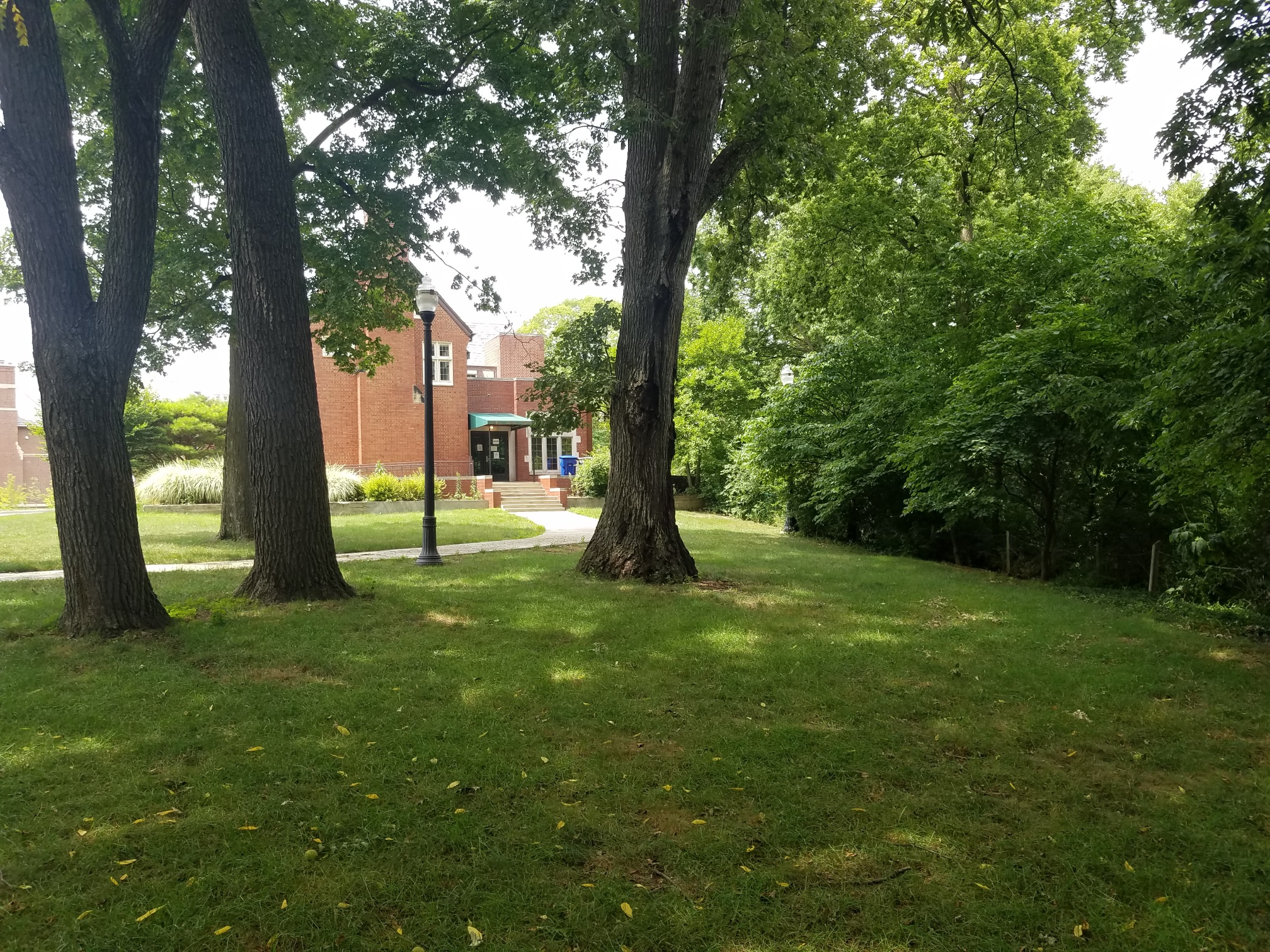
Email:jazi.1@osu.eduProject Description:Everly Jazi, in the environment and natural resources master’s program, explores green space as a means of health equity by testing differential experiences in the nature/well-being connection.Project Type:Living Lab ResearchSustainability Topic Area:Natural EnvironmentProject Location:40.004896605522, -83.038860797096
- Energy poverty and energy efficiency in ColumbusCatherine Chen
Energy poverty and energy efficiency in Columbus
Close dialogProject Lead:Catherine ChenCompletion Date:Collaborators:Dr. Hongtao Yi
John Glenn College of Public Affairs
Email:chen.8411@osu.eduProject Description:Catherine Chen, a Ph.D. candidate in public policy, investigates energy poverty and energy efficiency throughout Columbus.Project Type:Project with Partner OrganizationSustainability Topic Area:Built EnvironmentProject Location:39.958346155794, -82.997863775818
- Toward the development of effective conservation: A long term analysis of human-environmental interactions of mollusk foraging in FijiSamantha Kirgesner
Toward the development of effective conservation: A long term analysis of human-environmental interactions of mollusk foraging in Fiji
Close dialogProject Lead:Samantha KirgesnerCompletion Date:Collaborators:Dr. Julie Field.59
Email:kirgesner.4@osu.eduProject Description:Anthropology Ph.D. student Samantha Kirgesner’s project, “Toward the development of effective conservation,” will look at a long-term analysis of human-environmental interactions of mollusk foraging in Fiji.Project Type:Living Lab ResearchSustainability Topic Area:Natural EnvironmentProject Location:-18.855349749049, -179.08374030143
- Low cost pervious concrete filters for AMD remeditationFinn Haughn
Low cost pervious concrete filters for AMD remeditation
Close dialogProject Lead:Finn HaughnCompletion Date:Email:haughn.27@osu.eduProject Description:Finn Haughn, an undergraduate in civil, environmental and geodetic engineering, focuses on installing low-cost, pervious concrete filters for acid mine drainage remediation.Project Type:Living Lab ResearchSustainability Topic Area:Built EnvironmentProject Location:40.003509365704, -83.017051220595
- Effectiveness of intercropping on small scale, urban, organic growing systemsAndrew Yates
Effectiveness of intercropping on small scale, urban, organic growing systems
Close dialogProject Lead:Andrew YatesCompletion Date:Collaborators:Dr. Kristin Mercer
Email:yates.272@osu.eduProject Description:Undergraduate mechanical engineering student Andrew Yates researches the effectiveness of intercropping on small scale, urban, organic growing systems.Project Type:Living Lab ResearchSustainability Topic Area:Sustainable ResourcesProject Location:40.008294737408, -83.038432717094
- Integrated grain drying and storage system for use in developing countriesJaden Tatum
Integrated grain drying and storage system for use in developing countries
Close dialogProject Lead:Jaden TatumCompletion Date:Collaborators:Dr. Ajay Shah.971
Email:tatum.70@osu.eduProject Description:Food, agricultural and biological engineering Ph.D. candidate Jaden Tatum studies an integrated grain drying and storage system for use in developing countries.Project Type:Living Lab ResearchSustainability Topic Area:Sustainable Resources - Sustainable landscaping at OSU's College of Veterinary MedicineChristie Hammons
Sustainable landscaping at OSU's College of Veterinary Medicine
Close dialogProject Lead:Christie HammonsCompletion Date:Collaborators:Jean Williams - vet med
Dr. Mark Flint.71
Email:hammons.57@osu.eduProject Description:Christie Hammons and Jean Williams, veterinary medicine majors, are collaborating on a project centered on sustainable landscaping at the College of Veterinary Medicine.Project Type:Campus as Living LabSustainability Topic Area:Natural EnvironmentProject Location:40.000085515678, -83.026743649225
- Outfit the future: A second-hand clothing collectiveDavis Tommy
Outfit the future: A second-hand clothing collective
Close dialogProject Lead:Davis TommyCompletion Date:Collaborators:Genevieve Wagner - studio art
Email:davis.3186@osu.eduProject Description:Genevieve Wagner, an undergraduate studio art major, organizes a secondhand clothing collective called “Outfit the Future.”Project Type:Campus as Living LabSustainability Topic Area:Circular Economy - Harnessing psychological and communication science to develop effective messages for a zero waste messaging campaignBrittany Shoots-Reinhard
Harnessing psychological and communication science to develop effective messages for a zero waste messaging campaign
Close dialogProject Lead:Brittany Shoots-ReinhardCompletion Date:Collaborators:Jeremy Huang - data analytics and psychologyEmail:shoots-reinhard.1@osu.eduProject Description:Undergraduate data analytics and psychology major Jeremy Huang is harnessing psychological and communication science to develop an effective zero-waste messaging campaign.Project Type:Campus as Living LabSustainability Topic Area:Sustainable Resources, Circular EconomyProject Location:39.997437382388, -83.014523505117
- RESTORExchange Religion & Sustainability Database: Improvements & Future GrowthChristopher Winter
RESTORExchange Religion & Sustainability Database: Improvements & Future Growth
Close dialogProject Lead:Christopher WinterCompletion Date:Class Association:AEDE 4567Collaborators:Emily Martin
Cyrus Payne
Rebecca Dye
Greg Hitzhusen
Brent SohngenEmail:hitzhusen.3@osu.eduProject Description:The RESTORExchange database serves to provide helpful resources for faith-based sustainability work in communities, congregations, and families. Working in collaboration with Dr. Greg Hitzhusen and the database team we conducted research to help guide improvements for the next stages of site development. Specifically, we focused on identifying ways to enhance the functionality, visibility, accessibility, and networking capabilities of the database. Our research consisted of interviews with various faith and sustainability leaders in which we discussed their work, their experiences with the database, and their recommendations for its continued development. There are six recommendations that were formulated from our research data. After the incorporation of these recommendations for database improvement, more guidance will be available for future research development efforts.Project Type:Project with Partner OrganizationSustainability Topic Area:Built Environment - Waste Averted and Cleaner Energy: The Future of Telehealth at The Ohio State University Wexner Medical CenterLauren Koch
Waste Averted and Cleaner Energy: The Future of Telehealth at The Ohio State University Wexner Medical Center
Close dialogProject Lead:Lauren KochCompletion Date:Class Association:AEDE 4567Collaborators:Mike Kalnasy
Alayna Press
Naomi Trotta
Jayson Velazquez
Cole Wallis
Greg Hitzhusen
Bruce Braine
Lauren KochEmail:lauren.koch@osumc.eduProject Description:This report seeks to assist the Ohio State University Wexner Medical Center in their goals to understand the amount of waste avoided due to increased telehealth due to COVID-19 and the feasibility of a renewable microgrid in their healthcare system. This report provides a waste assessment of the telehealth patient appointments and a formula to calculate the amount of waste avoided per telehealth appointment. This report also assesses the feasibility of a renewable microgrid at the Ackerman Data Center and outlines what the ideal business case for a renewable microgrid would be for WMC. The methods of this report include literature reviews, informational interviews, a policy analysis, and a cost-benefit analysis. Overall, this report provides the OSU WMC with tools and recommendations to move forward with assessing avoided waste and with considering the implementation of renewable microgrids.Project Type:Project with Partner OrganizationSustainability Topic Area:Climate Health, Circular EconomyProject Location:39.9956028604, -83.017059802878
- Incentives for Utility Scale Solar: Recommendations for Ohio Based on a Benchmark AnalysisKelleen McGuinness
Incentives for Utility Scale Solar: Recommendations for Ohio Based on a Benchmark Analysis
Close dialogProject Lead:Kelleen McGuinnessCompletion Date:Class Association:AEDE 1200Collaborators:Roman Gioglio
Destiny Hackney
Kay Tompkins
Sarah Walsh
Bruce Braine
Greg Hitzhusen
Alex Slaymaker
Zach McGuireEmail:hitzhusen.3@osu.eduProject Description:The goal of this project was to conduct a landscape assessment of best practice utility-scale solar incentives, then recommend a program to Smart Columbus that could work in Central Ohio. With the climate crisis shaping our world, states are under pressure to mitigate their harmful emission outputs by shifting to renewable energy sources. Through collaboration with Smart Columbus, a Columbus based sustainability initiative, Central Ohio has the opportunity to transition their electricity sector by investing in utility-scale solar projects. Ohio's flat topography is ideal for solar deployment on this scale, however incentivizing utility-scale solar projects remains a challenge. Our team conducted interview with professionals in the field and compiled literature reviews to form a benchmark analysis of utility-scale solar projects in Midwestern States. We focused on the policies and programs of different states and then compared geopolitical indicators to see if these incentives were applicable to Ohio. We found a strong Renewable Portfolio Standard (RPS) played a key role in deployment and most policies and programs used state/ratepayer funded incentive along with community engagement. Thus, we recommend a three-pronged approach that will bolster an incentive package with complementary pieces. The three-prongs are: (1) Traditional Incentives, (2) Job Development, and (3) Community Partnership.Project Type:Project with Partner OrganizationSustainability Topic Area:Sustainable Energy - Analysis of Green Columbus Tree Nursery OperationsJustin Keeling
Analysis of Green Columbus Tree Nursery Operations
Close dialogProject Lead:Justin KeelingCompletion Date:Class Association:AEDE 4567Collaborators:Emily Barber
Brooke Kauchak
Griffin Boggs
Rachel Morris
Luke Borling
Email:hitzhusen.3@osu.eduProject Description:This report is a collection of research intended to assist Green Columbus, a nonprofit organization, operate their two tree nurseries which are located in Linden and Hilltop. Using key interviews with similar organizations, as well as literature review, a series of recommendations are provided to give Green Columbus strategies to base their tree nursery operations on. The report evaluates the current operating process of Green Columbus' tree nurseries and how improvements can be made to their current practices, future programs, educational outreach, and their financial longevityProject Type:Project with Partner OrganizationSustainability Topic Area:Sustainable Resources, Natural EnvironmentProject Location:40.087488554261, -83.08539390564
- Community Gardens: Exploring Community Gardens in Columbus, Ohio: How to protect them and who they serveParker Dean
Community Gardens: Exploring Community Gardens in Columbus, Ohio: How to protect them and who they serve
Close dialogProject Lead:Parker DeanCompletion Date:Class Association:AEDE 4567Collaborators:William Sharp
Margot Koenig
Anabel Pederson
Liz Heneghan
Dr. Greg Hitzhusen
Dr. Tim JaquetEmail:hitzhusen.3@osu.eduProject Description:This is a case study of community gardens in Columbus, Ohio. This study was prompted by the development of a long time garden in the Southern Orchards Community, Kossuth Street Gardens. The purpose of this project was to interview key stakeholders in the community in order to better understand what led to Kossuth's development, and then to understand ways to protect and support community gardens in the City of Columbus. This project was presented as an ArcGis Story Map, so that it was interactive, interesting and accessible to the public and community members.
Description:Project Type:Project with Partner OrganizationSustainability Topic Area:Sustainable Resources, Natural EnvironmentProject Location:39.992905234638, -82.999464511413
- Intentional Sustainability Community BenchmarkingBrannon Teets
Intentional Sustainability Community Benchmarking
Close dialogProject Lead:Brannon TeetsCompletion Date:Class Association:AEDE 4567Collaborators:Olivia Kirven
Gabe Castillo
Wanning Li
Dr. Greg Hizhusen
Dr. Tim JaquetEmail:teets.47@osu.eduProject Description:Our project responds to the Exploratory Research Group (ERG) at OSU that is looking to create an intentional sustainability community on campus. With the motivation of building such a community at OSU, the focus of our project is to do preliminary benchmarking of similar communities at other universities, examine the niche for such a community at OSU, and explore the level of interest among OSU undergraduates. We set up three research objectives to explore the possibility of establishing this type of community. Objective One was to identify best practices from similar communities and how each community had been created. We focused on four case studies of Denison Homestead, the Oregon Extension Program, Gould Farm, and Yale Divinity Living Village. We gained additional information about the Oregon Extension through an interview with Jamie Skillen and interviewed Brian Snyder to learn additional details about Gould Farm. Objective Two was to explore how communities at OSU function and uncover any likely challenges that might arise in developing a community at OSU. We conducted case studies and key informant interviews with ERG members and learned about two similar communities already at OSU: SUSTAINS and ENR Scholars, to learn more about the opportunities and challenges that might be present at OSU regarding creating and developing a new community. Objective Three was to examine the level of interest of OSU undergraduates in an intentional community. We conducted a survey of undergraduates and conducted statistical analysis on the data of all respondents to understand their majors, their interest level in such a community, and what elements encourage or discourage them to join this community. Based on all of our information and data analysis, we summarized some desirable and avoidable aspects from other communities and suggested some feasible recommendations for building an intentional sustainability community at OSU. Based on our various case studies, we believe that achieving this community requires setting common goals and community activities to help people achieve their personal values and work towards a common goal. Based on our interviews and as a way to portray what might work at OSU, we also propose three options for where OSU could locate such a community, each with its own advantages and disadvantages. To sum up, this report describes our research objectives and findings and provides constructive recommendations for creating this community. Our results are the first phase study of the opportunities at OSU to develop an intentional community, and it is designed to allow subsequent researchers to build on our recommendations and data.Project Type:Campus as Living LabSustainability Topic Area:Built EnvironmentProject Location:40.006109596546, -83.026037691452
- Wexner Medical Center Recycling InitiativesCharles Graves
Wexner Medical Center Recycling Initiatives
Close dialogProject Lead:Charles GravesCompletion Date:Class Association:ENR 4567Collaborators:Hannah Harlan
Anna Hollenack
Grace Manhoff
Addison Rehark
Dr. Tim Jaquet
Dr. Greg HitzhusenEmail:graves.420@osu.eduProject Description:The Wexner Medical Center (WMC) is launching a new recycling initiative to increase its waste diversion rate with the assistance of an Ohio EPA grant. The initiative involves designing new combined trash and recycling carts, increasing the use of Automated Transport Systems (ATS) to efficiently move waste, converting one of the trash compactors to collect strictly comingled recycling, implementing a new recycling education campaign to inform staff, and establishing a framework to collect results for the Ohio EPA. An additional component included in the grant is a collaboration with The Ohio State University's School of Environment and Natural Resources to establish a senior capstone project to assist with elements of the new recycling system. This capstone group was tasked with evaluating a waste characterization study conducted by Synergent, providing feedback on the new cart design, creating an education campaign that features an action plan and proposed signage for staff recycling, and designing a framework to evaluate the initiative's success to report the results to the Ohio EPA. The purpose of this project is to help guide the direction of the recycling program to support Ohio State's sustainability goals. The WMC can utilize this research and recommendations to educate employees and guests on proper recycling techniques. After the educational campaign takes effect, they can use the evaluation framework to determine the effectiveness of the initiative and make necessary changes. The main goal of this project, assisting the WMC in achieving its goal of becoming a zero-waste facility through the implementation of a new recycling program, was achieved by dividing the main goal into three separate research objectives. The research objectives were: 1) Interpret the results of the waste study to evaluate the design of the new waste carts 2) Create an education campaign for the new recycling program 3) Design a framework to review and evaluate the results of the new recycling campaign for the Ohio EPA. The research discussed throughout this report was collected through key informant interviews, literature review, and data analysis. Information was also accumulated in weekly informal interviews with the project mentors, Lauren Koch, Sustainability Consultant at the WMC, and Mary Leciejewski, Zero Waste Manager at OSU. They provided access to the waste study results, cart design plans, and marketing resources. Connections were established at the WMC for meetings with the marketing team and environmental services staff. Insight about the recycling initiative and waste removal process was also gained through a tour of the WMC loading dock and waste rooms throughout the hospital. We conclude that the WMC can increase its waste diversion rate from the landfill and limit the level of contamination of recyclables by implementing the findings from this capstone project. One recommendation is to decrease the amount of waste entering the building by working with the supply chain to acquire supplies packaged at greater sustainability and efficiency. The second recommendation is to design training methods and signage to target specific groups within the hospital by using the proposed education action plan. Lastly, using the evaluation framework, a WMC employee should complete the steps bi-weekly to gather data that can be synthesized and reported to the Ohio EPA.Project Type:Campus as Living LabSustainability Topic Area:Built Environment, Circular EconomyProject Location:39.995352993817, -83.017823696791
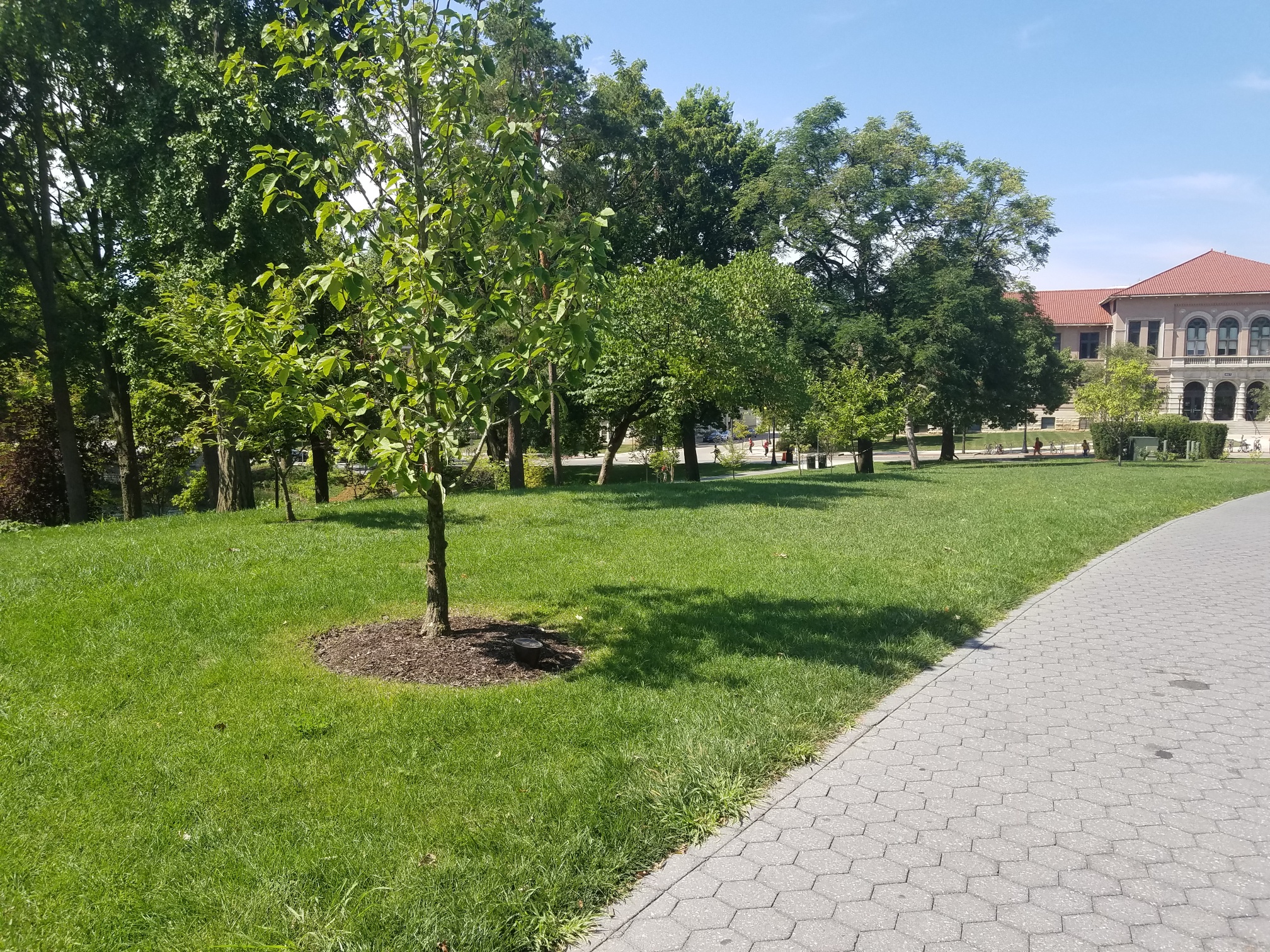
- The Undergraduate Biodiversity Research CollaborativeIsabella Lause
The Undergraduate Biodiversity Research Collaborative
Close dialogProject Lead:Isabella LauseCompletion Date:Class Association:AEDE 4567Collaborators:Mac McCloy
Andy Moffit
Zach Richards
Kelly SlavnikEmail:lause.26@osu.eduProject Description:The report provides recommendations for the establishment and facilitation of an undergraduate living laboratory program which researches the intersection of biodiversity and sustainability issues on campus.Project Type:Campus as Living LabSustainability Topic Area:Built Environment, Natural EnvironmentProject Location:40.005406131024, -83.027316568187
- Organizational Sustainability Assistance Program ReportEthan Redden
Organizational Sustainability Assistance Program Report
Close dialogProject Lead:Ethan ReddenCompletion Date:Class Association:AEDE 4567Collaborators:Melissa Ferruso
Carrot Wang
Anna Oesterich
Rachel Walker
Dr. Tim Jaquet
Dr. Greg HitzhusenEmail:redden.32@osu.eduProject Description:In light of the upcoming executive decisions being made on behalf of the city's Climate Action Plan, Smart Columbus partnered with us to explore ways to help those vulnerable businesses and organizations become more resilient and capable of increasing sustainability. we were tasked to seek existing business sustainability initiatives and practices in cities around the country that could help business and nonprofit organizations in Columbus strengthen their position in addressing climate change. The objectives that guided our research were to identify local contexts for sustainability assistance, conduct case studies of assistance programs, and, based on the research findings, develop recommendations for the City of Columbus to accelerate their organizational sustainability efforts. A total of 14 analytical case studies of assistance programs were compiled from Denver, Tempe, Seattle, Minneapolis, San Francisco, Los Angeles, and New York, as well as from federal and national programs. The main finding from these case studies was that five main categories of services are pertinent to sustainability assistance programs: information, technical assistance, network, recognition and promotion, and infrastructure strengthening. Our team's recommendation to the City of Columbus is to develop an organizational sustainability assistance program tailored towards businesses and nonprofits in Columbus. To help the City construct and facilitate this program, we developed a program design that illustrates its structure and elements, the process for building the program, the goals and strategies for the program success, a list of services they may provide, and a comprehensive summary of the existing resources that could work in tandem with the program.Project Type:Project with Partner OrganizationSustainability Topic Area:Built Environment - Impact Assessment of Past EEDS Capstone ProjectsRachel Bulko
Impact Assessment of Past EEDS Capstone Projects
Close dialogProject Lead:Rachel BulkoCompletion Date:Class Association:ENR 4567Collaborators:Ryan Craycraft
Brittney Esch
Grace Gothard
Dr. Gregory Hitzhusen
Dr. Timothy JaquetEmail:bulko.1@osu.eduProject Description:This project investigated the impacts, both qualitative and quantitative, of past capstone projects offered through the School of Environment and Natural Resources' EEDS program.Project Type:Project with Partner OrganizationSustainability Topic Area:Sustainable Resources
OSU Campus MesonetJason CervenecOSU Campus Mesonet
Close dialog
Project Lead:Jason CervenecCompletion Date:Class Association:Geograpy 5922 - Microclimatology/Microclimatological MeasurementsCollaborators:Byrd Center, State Climate Office of Ohio, Geography Department, OSU ExtensionEmail:cervenec.1@osu.eduProject Description:The OSU Campus Mesonet is a series of weather stations collecting and recording data throughout the land use types on campus. The station locations were selected to be representative of campus. This project was funded by an OSU Sustainability grant.Project Type:Campus as Living LabSustainability Topic Area:Climate Health, Natural EnvironmentProject Location:40.003358146323, -83.038444519043
- OSU Student FarmConnor Nagy
OSU Student Farm
Close dialogProject Lead:Connor NagyCompletion Date:Class Association:HCS 2307Collaborators:SUSTAINS Learning Community, Waterman Farm, the College of Food Agriculture and Enviornmental Sciences, the Buckeye Food AllianceEmail:nagy.221@osu.eduProject Description:Our long lasting project is The Ohio State Student Farm on the Waterman Agriculture and Natural Resources Laboratory. This 4 acre farm is entirely run by student employees and volunteers. We run CSA programs and donate food to the Buckeye Food Alliance. Additionally, we lead the Student Growing Collaborative to organize volunteer workdays, workshops, and social events. HCS 2307 is a course that mainly takes place on the Student Farm and isProject Type:Campus as Living LabSustainability Topic Area:Sustainable ResourcesUrls:https://mcusercontent.com/124d8169820b0f8db173cdfa8/files/026efb23-5a05-4974-8f…, https://linktr.ee/studentfarmosu, https://www.thelantern.com/2021/08/student-farm-prepares-for-record-setting-har…Project Location:40.009262012964, -83.038627244532
- Enhancing Soil-Ecosystem Services of the Campus Landscape to Advance SustainabilityKlaus Lorenz
Enhancing Soil-Ecosystem Services of the Campus Landscape to Advance Sustainability
Close dialogProject Lead:Klaus LorenzCompletion Date:Collaborators:Rattan Lal, CFAES Rattan Lal Center for Carbon Management and Sequestration (C-MASC);
Andrew Neil, GIS Analyst, Facilities Information Technology Services (FITS), Planning, Architecture and Real Estate (PARE) department;
Brian Slater, School of Environment and Natural Resources;
M. Scott Demyan, School of Environment and Natural ResourcesEmail:lorenz.59@osu.eduProject Description:Soils of the OSU campus provide ecosystem services (ESs) such as biomass production, moderation of climate, and storing carbon, nutrients and water. Thus, healthy soils on campus contribute to the well-being of the OSU community and the environment. However, the soil ESs can potentially be enhanced by the application of biochar, i.e., a specific type of charcoal used as a soil conditioner.
This project supported by Ohio State Sustainability Fund determines soil biological, chemical and physical properties at four lawn sites across campus. The sites include the lawn established on the former Vivian Hall site (#2), less disturbed lawns in front of Honors House (#91) and the Faculty Club (#107), and an irrigated lawn south of Thompson Library (#94).
Baseline soil samples in 0-10 and 10-20 cm depth were taken at six 1 x 1m plots at each site. The six plots are placed in a line separated by 1-m buffer between the plots. Three of the plots will receive 1 kilogram of pinewood biochar each (equivalent to 10 Mg biochar ha-1). Soil samples will be taken again after 6, 12 and 24 months to monitor temporal changes in soil health and assess the effects of biochar. Soil greenhouse gas fluxes will be monitored by regularly measuring the fluxes of carbon dioxide, methane and nitrous oxide on site with a photoacoustic gas monitor (PAS) attached by a sampling lid to the field acoustic chambers which remain on-site.
Project Type:Campus as Living LabSustainability Topic Area:Urban soil ecosystem services
Floating wetlands: A sustainable solution for addressing nutrient pollutionOzeas CostaFloating wetlands: A sustainable solution for addressing nutrient pollution
Close dialog
Project Lead:Ozeas CostaCompletion Date:Collaborators:Zhaozhe Chen, PhD candidate, School of Earth Sciences, OSUEmail:costa.47@osu.eduProducts:Pleasant_Valley_presentation.pdf , Lantern_article_2020-11-16.pdf , UM_CONT_AlumMagazine_SU21_2814612_12_23_Up_Front_v5 4.pdfProject Description:The Milliron Research Wetlands, located at the Ohio State Mansfield Campus, are being used as living labs for a phytoremediation experiment to assess the nutrient removal efficiency of floating artificial wetlands (AFIs). The goal is to eventually upscale these floating wetlands as a low-cost, environmentally-friendly, and effective remediation/prevention treatment for nutrient pollution in lakes/wetlands/streams in Ohio and beyond. More information can be found at https://u.osu.edu/costa.47/phytoremediation/Project Type:Living Lab ResearchSustainability Topic Area:Natural EnvironmentProject Location:40.79943, -82.57756
- Student Farm Maize ResearchKristin Mercer
Student Farm Maize Research
Close dialogProject Lead:Kristin MercerCompletion Date:Collaborators:Office of Undergraduate Research
Center for Applied Plant SciencesEmail:mercer.97@osu.eduProducts:OfficialSFReport2020-compressed.pdfProject Description:In 2020, Dr. Kristin Mercer, HCS, conducted research on nitrogen fixation in maize on the student
farm. This research was started in 2019 in collaboration with an undergraduate, Noah Kayafas,
who was a production manager of the student farm, as well as a recipient of Undergraduate
Research Apprenticeship Program (URAP) funds, through the Office of Undergraduate Research
and Creative Expression. Noah’s 2020 continuation of research was to be funded by the Center
for Applied Plant Sciences (iCAPS) program; however, this research was disrupted by the COVID-
19 pandemic. Dr. Mercer continued the research during 2020 with help from her lab members,
Jack McCoy and Layne Connolly.Project Type:Living Lab ResearchSustainability Topic Area:Natural EnvironmentProject Location:40.0621568, -82.8604416
- Student Farm Water CatchmentAndrew Yates
Student Farm Water Catchment
Close dialogProject Lead:Andrew YatesCompletion Date:Collaborators:This project was a collaboration among FABE professor Chris Ratcliff, undergraduate students Rachael Birri and
Bonnie Sutherland, and the Engineers Without Borders student group. This project was funded by a
2019 Coke Grant awarded to past student farm employees, Rachael Birri and Bonnie Sutherland.Email:yates.272@osu.eduProject Description:Starting in the spring of 2019, the OSU student organization Engineers Without Borders designed
a water catchment system for our high tunnel. The project will improve the sustainability of our
irrigation system while improving drainage around our high tunnel.Project Type:Campus as Living LabSustainability Topic Area:Natural EnvironmentProject Location:40.009350994651, -83.037677407265
Scott House Composting ProgramMatt GriffinScott House Composting Program
Close dialog
Project Lead:Matt GriffinCompletion Date:Class Association:AEDE 1200Collaborators:SUSTAINS Learning Community,
Student Life Office of Energy Management and Sustainability,
Facilities, Operations and Development
Brian Roe, AEDE FacultyEmail:griffin.603@osu.eduProject Description:This project is a pilot program for how a residential composting program could occur at Ohio State. This project is student-led and was developed as part of the SUSTAINS Learning Community Seminar Class. Composting bins are placed throughout the Scott House building and residents are educated on what is and isn't compostable. Student employees then sort collected waste and remove any non-compostable materials. The goals of this project are to identify how best to educate students living in dorms on what is and isn't compostable, to divert waste from the landfill, and to equip students with project management and leadership skills.Project Type:Campus as Living LabSustainability Topic Area:Sustainable Resources, Circular EconomyProject Location:40.004253428157, -83.013350106776